Croatia should be a top bucket list destination for its crystal clear azure water and its unique twist on the classic Mediterranean vibe, but that’s not all it has going for it. The cities of Zagrab and Split are some of my favorite European cities, while the mountains are enough to make any hiker or rock climber drool. And do I need to mention paddling, diving and snorkeling in crystal clear water? Oh, and my favorite part, the endless miles of coastline with perfectly calm seas, sometimes more calm than a bathtub, thanks to various islands that shelter from winds. In my opinion, Croatia should be a top destination for vacationers looking for relaxation, for adventure, or for a mix of the two. But, with a twist…go in the off-season, at least unless your main goals are swimming or diving.
Below is a summary of the places we experienced in Croatia. We visited Croatia in December. Chris and I have a very specific style of travel that revolves around trying to experience the mountains and water authentically like the locals do. We often skip the top tourist highlights, and always skip museums (except in very bad weather or if they are of major historical significance). Many of the activities we do are only suitable to those who have extensive experience in outdoor or in watersports. So, if that doesn’t fit you, you might find better travel advice elsewhere. If that does fit you, read on.
Nature Park Žumberak
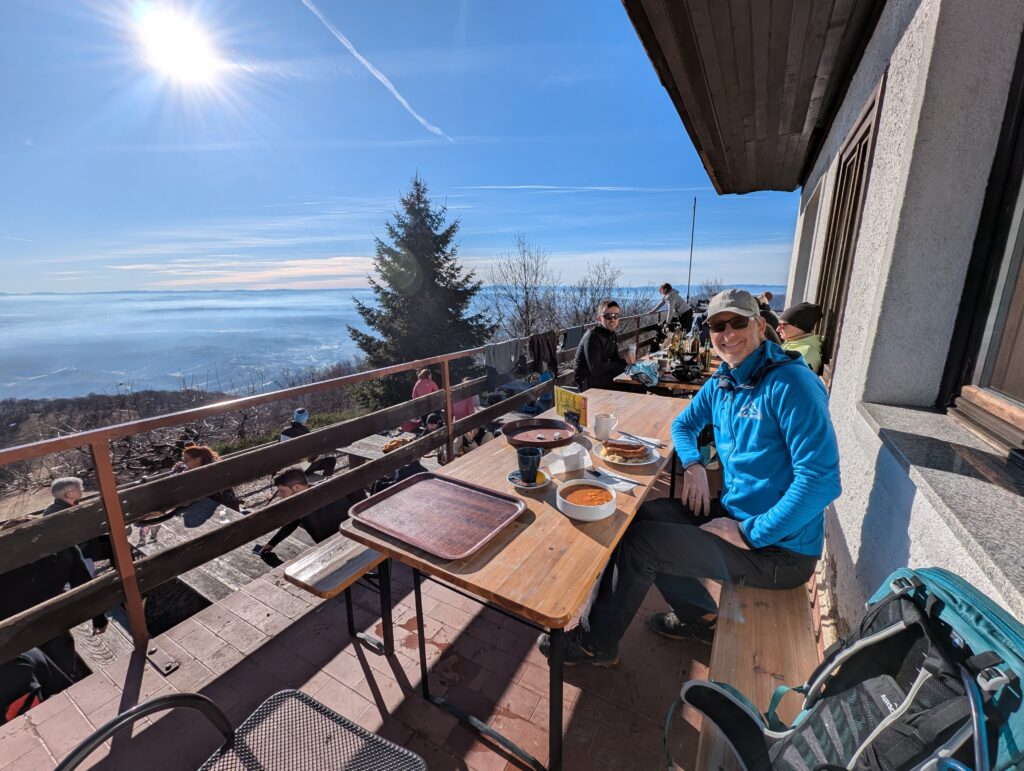
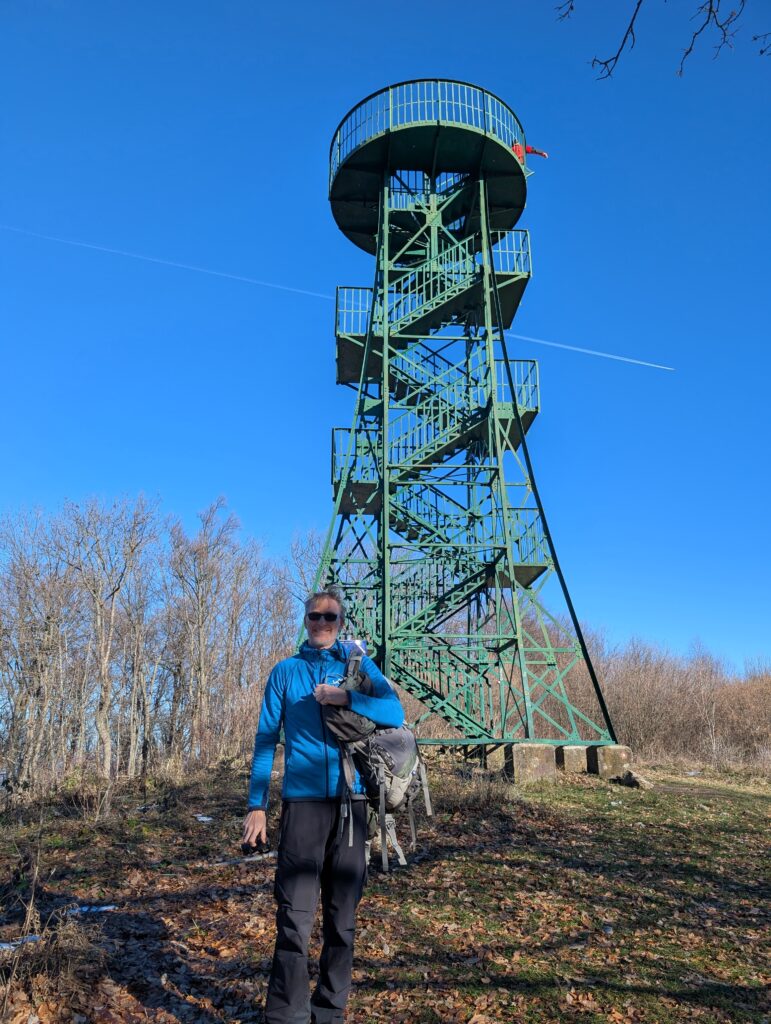
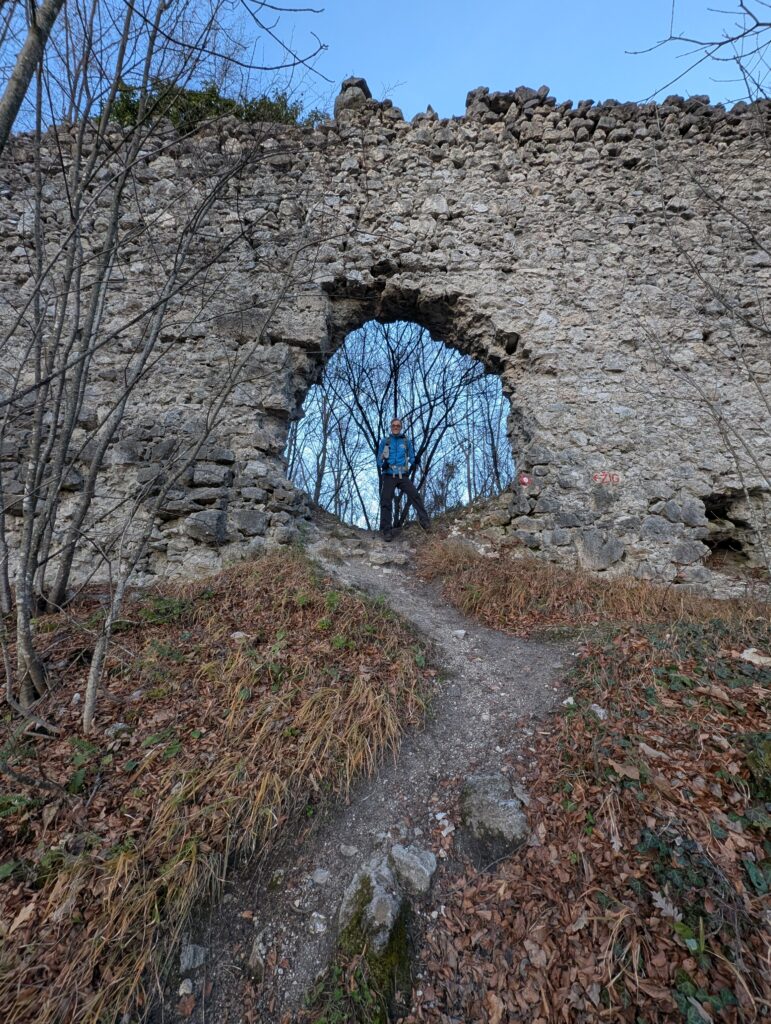
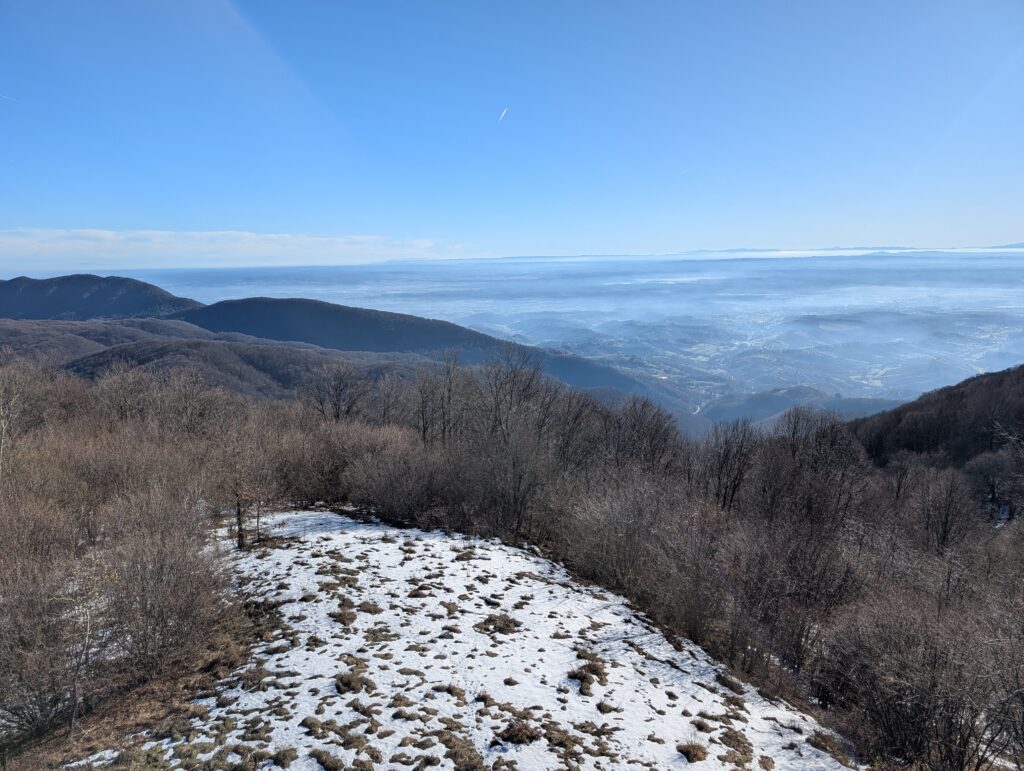
Immediately after crossing the border into Croatia, we were ready to get our bodies moving. So, we headed to Mali Lipovec, where we left Tusker for the day. We first ascended the Japetić Mountain, at 879 m. It is one of the higher mountains in this nature park on the outskirts of Zagreb. It’s a popular hiking destination, complete with a viewing tower. From there, we headed to the Planinarski dom Žitnica (mountain hut) for a delicious lunch with a panorama on their sunny terrace. We then descended toward the valley and ascended on the other side for a series of peaks: Straznik 708 m., Point 693 m., Preseka Pass at 683 m., before a lovely and unexpected walk along a ridgeline (ridgelines are my favorite!) before descending to castle ruins and finally back to Tusker. The entire walk was about 13 km. with close to 800 meters of elevation gain.
Our overall assessment: the hiking was more diverse and interesting than we were expecting. This is a huge nature park and there is so much more to see. We would have been happy to spend some more time there and visit different corners of the park. In particular, the western side looked interesting, but we didn’t make it there.
Zagreb
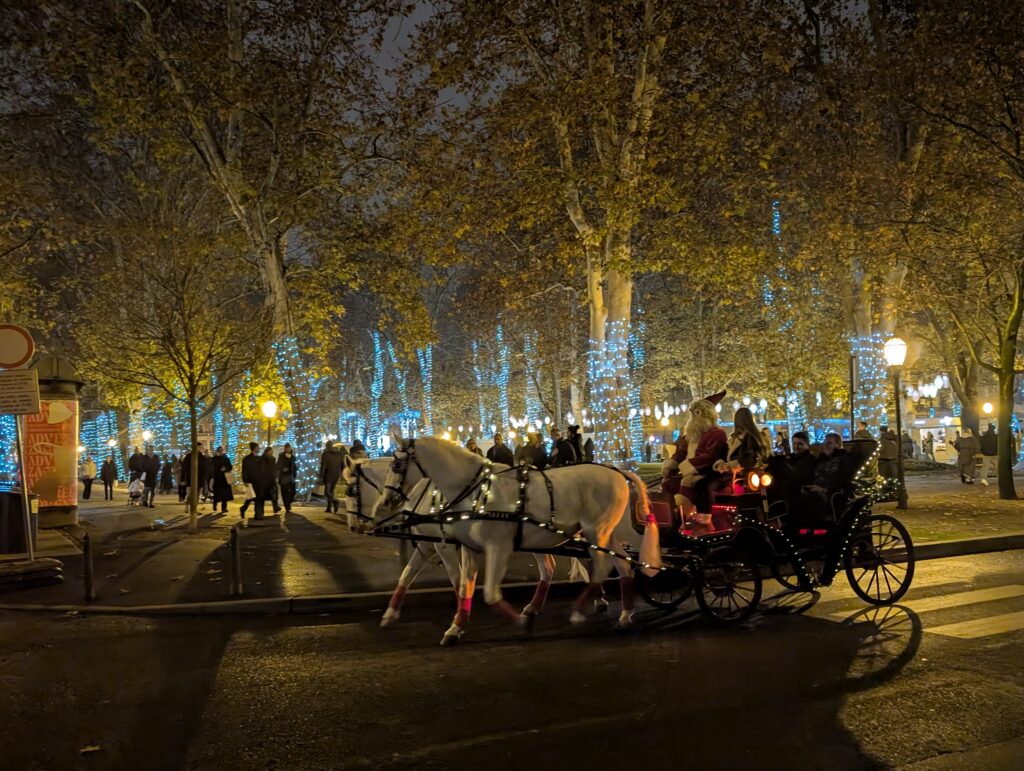
‘Tis the season for Christmas Markets! Despite our desire to stay as much in nature as possible, Zagreb’s award winning Christmas Market pulled us in, and we found ourselves spending a couple of nights on the outskirts of Zagreb. We first went into the city for the Christmas Market on Friday evening. Croatians like to play rock music at their Christmas markets, which didn’t exactly boost our Christmas spirit, but the food looked tempting and we fell in love with their mulled gin. The Christmas Market itself wasn’t a highlight for us, but the city was beautiful.
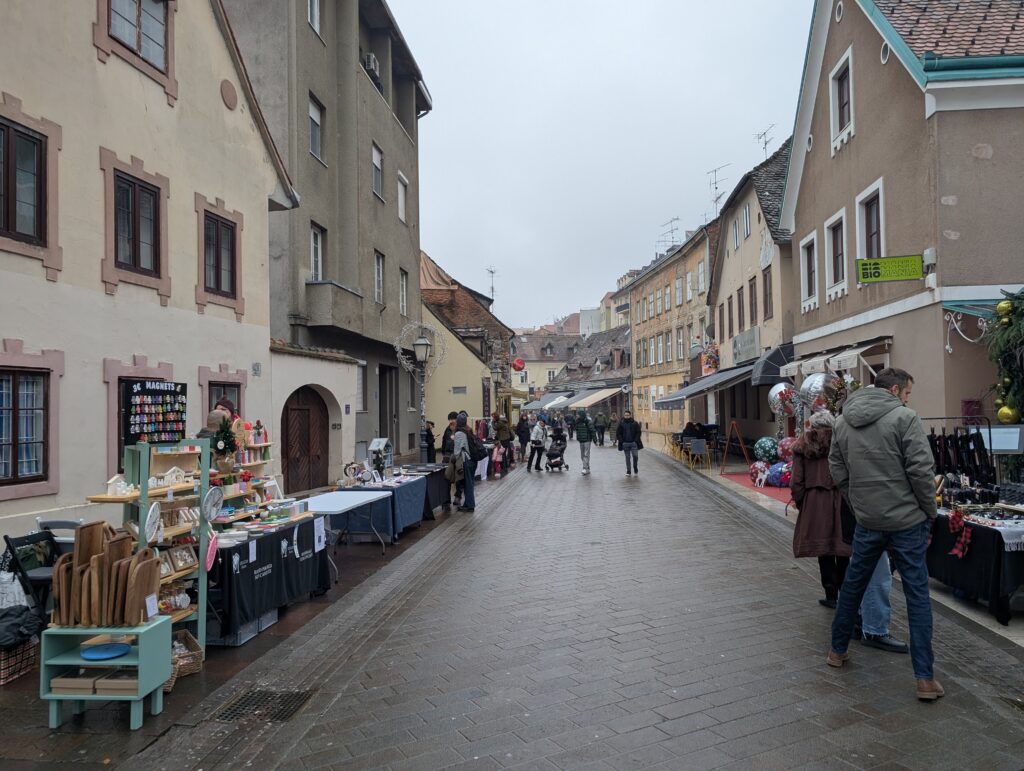
We returned the following morning for a walking tour through the city, making our way up to the upper city for the “boom at noon,” a local tradition where a canon goes off every day at noon. At the end, it really was just that. A boom. I could have lived without it. But, the city was fascinating and we enjoyed walking around.
Zagreb is definitely worth a visit and, in my opinion, should be considered more of a tourist destination than it is.
Plitvice Lakes National Park
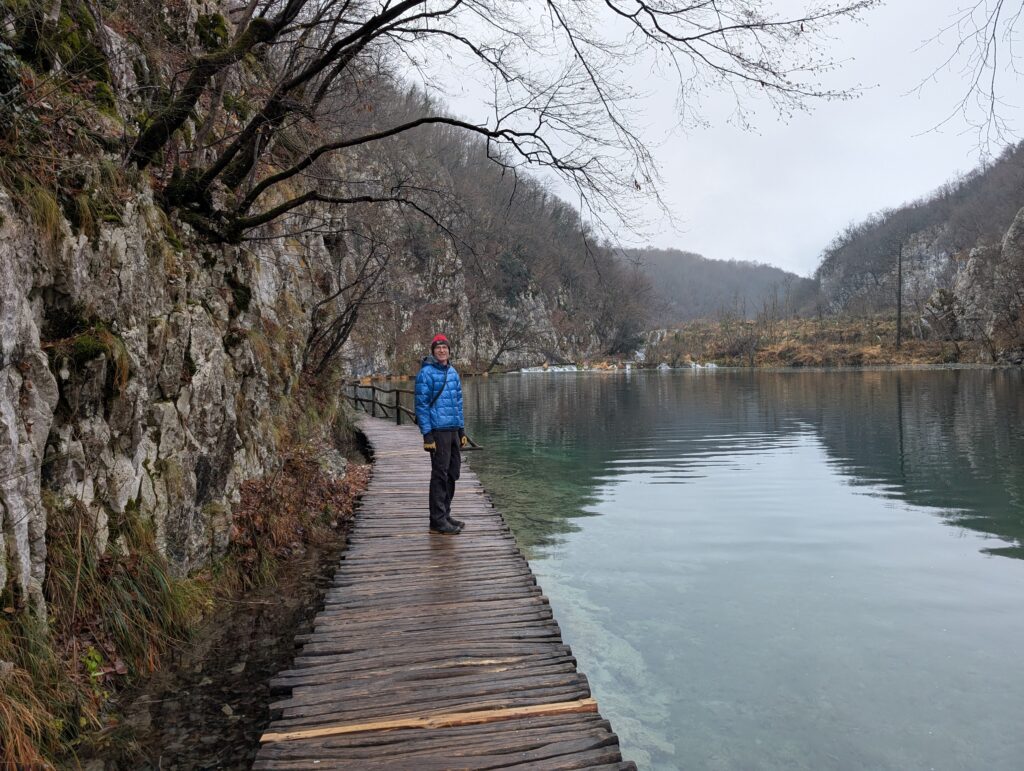
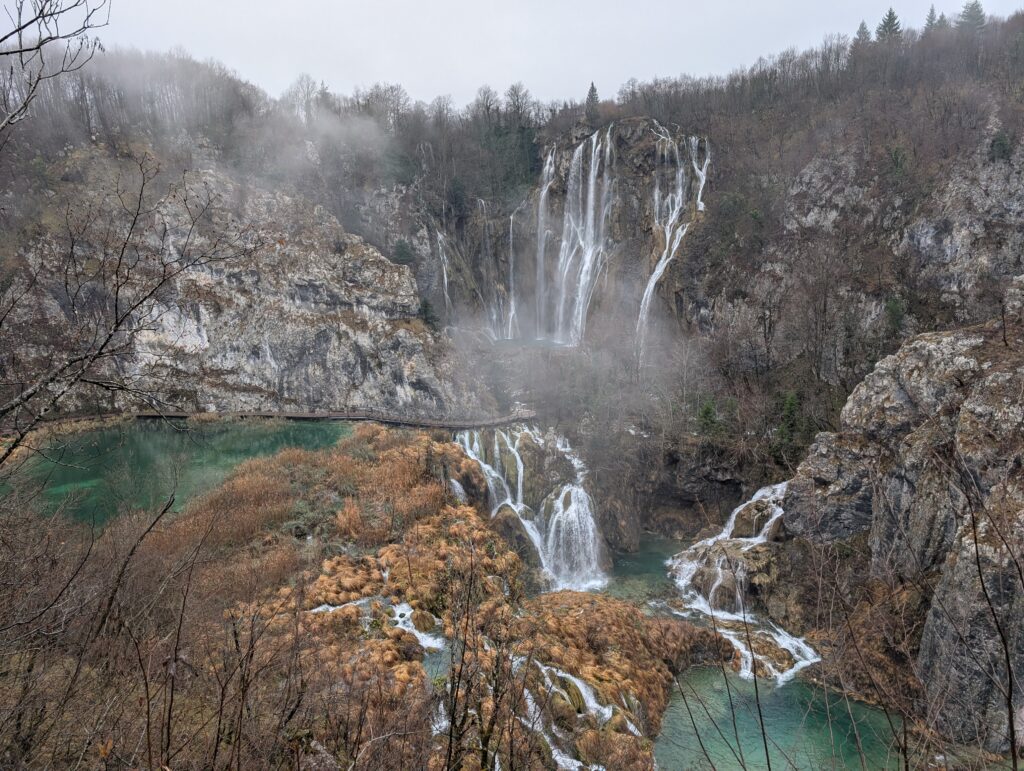
With 16 layers of turquoise lakes, connected by a seemingly endless chain of waterfalls, Plitvice is a true Croatian highlight. We suspected that visiting in December would have drawbacks, that maybe the color of the lakes wouldn’t be as beautiful without the sun shining on it. We were right that there were some drawbacks, but there were also some great advantages.
In the summer, entry to Plitvice costs 40€ per person plus 25€ for parking (in 2025). In December, we paid just 10€ each and had free parking, which was a great start to our visit. We joked that when we are only paying one-fifth of the price, we would probably get only one-fifth of the experience. That was partially true, but it still ended up being an unforgettable visit.
Plitvice has a main area, which has the most famously photographed lakes and waterfalls, along with an upper section on the other side of a large lake. The upper section appeals most to us, because it is supposed to be less crowded and more spread out. But, in the winter, the upper section is closed, as well as the trails along both sides of the lake – one-fifth of the price for one-fifth of the fun.
We arrived early at the parking lot at the northern entrance, which is where the main lakes are at and it’s the entrance that makes the most sense in the winter. We entered the park shortly after they opened, and took our time strolling the boardwalks alongside the turquoise lakes and analyzing each waterfall we came across. We had the place all to ourselves! Sure, it was winter and the colors weren’t as vibrant, but I’ll never forget the feeling of having it all to myself. If I were to come back, I would probably do it in winter again.
Tips:
- Walk the lakes against the flow of the water, so you have waterfall views along the way
- If you visit in winter, don’t bother with the boat ride to the other end of the lake. It’s included, but with the upper lakes closed, it really only is helpful to reach the other parking area.
- Even in winter, you need to visit early to have some solitude. We went back through the main area later in the day, and there were more people, making it a less magical experience.
- Don’t miss the nearby village of Rastoke. Leave half a day, or even spend a night there in a hotel that is surrounded by waterfalls. The waterfalls section of town is just south of Highway 1 where it runs east west, before it makes a hard turn to the southwest. Look for a hotel or restaurant in this area, or at least take a walk there.
Velebit Nature Park
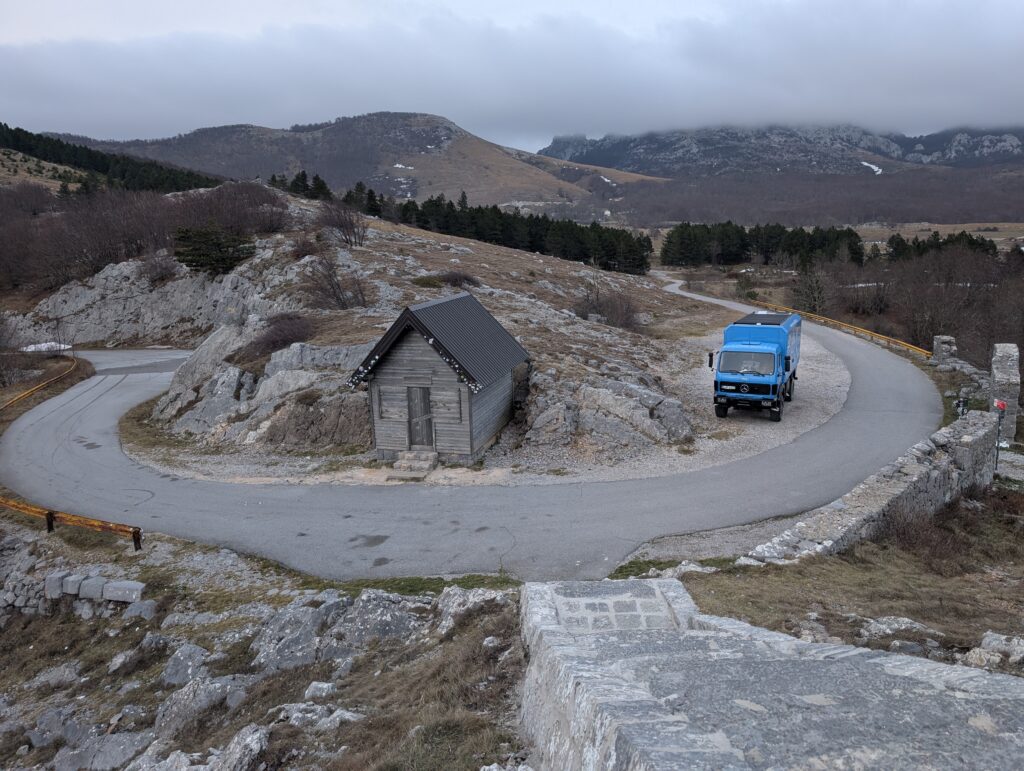
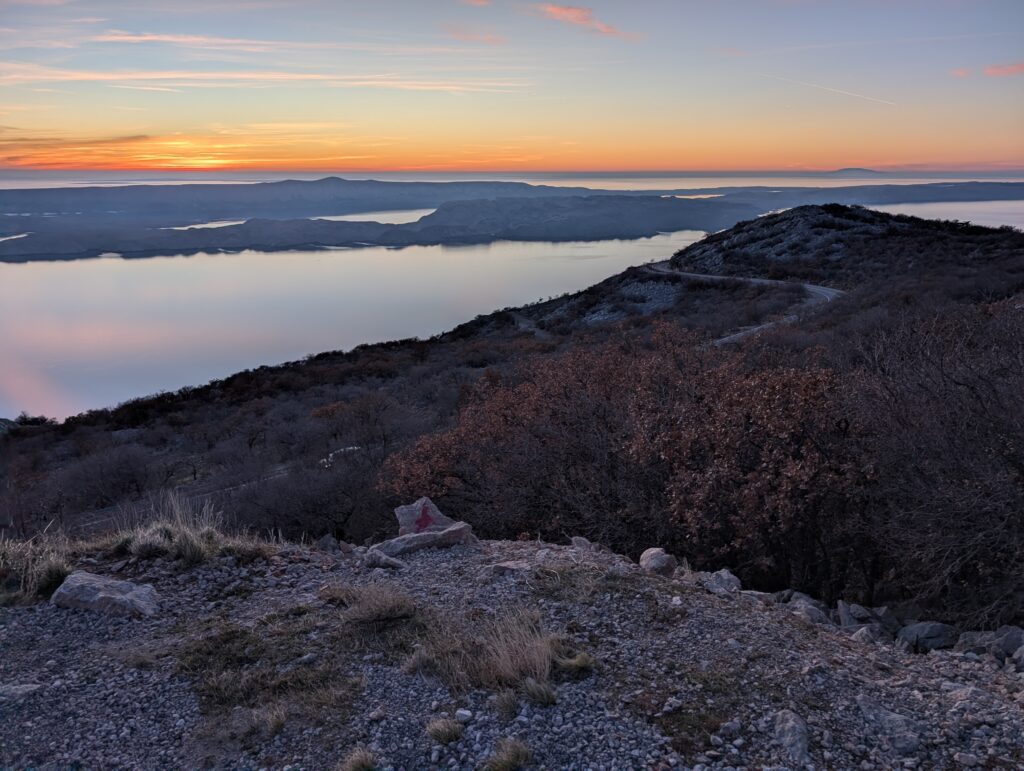
With its whimsical rock formations towering above the coastline, Velebit Nature Park is worth a visit. This is a massive nature park that covers 2200 square kilometers, stretching north to south in a narrow strip. The park is home to hiking trails, simple mountain huts where you bring your own food and sleeping bags, a fascinating landscape and incredible views.
Unfortunately, we didn’t spend enough time here. We were in a rush to get down to lower elevations at the coastline to escape freezing temperatures (our external tanks need to be heated in freezing temperatures and that uses a lot of battery). But, this is a place I definitely want to come back to. In particular, I want to hike the Premuzic Trail, a 52 kilometer stretch of the Velebit Hiking Trail, with accommodation in very simple huts.
Plan your trip to Velebit Nature Park
Karlobag
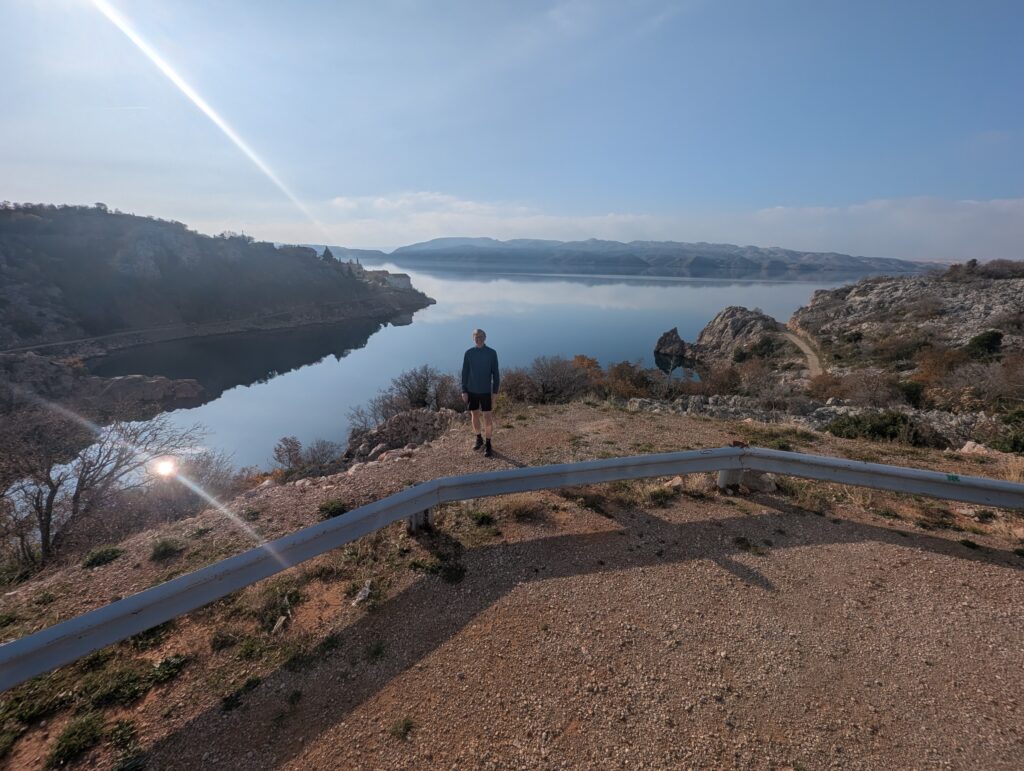
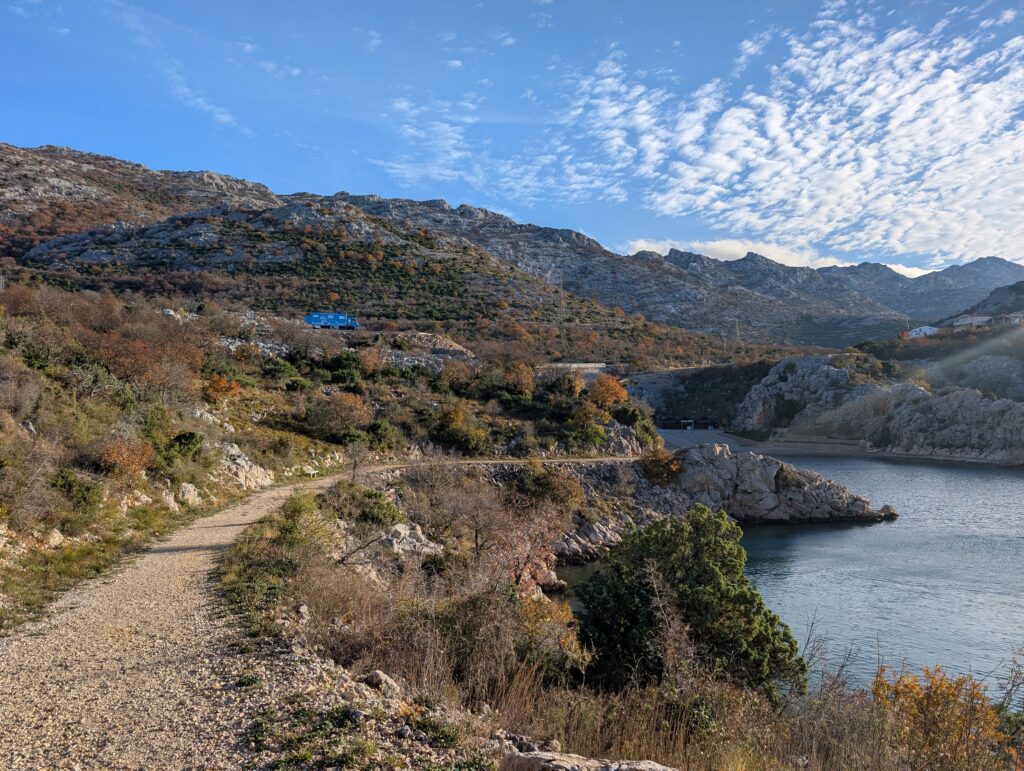
Some places just stick with you, and this was one of those for me. Karlobag is a village right below Velebit Nature Park. After leaving Plitvice National Park, Karlobag was where we arrived at the coast. A sleepy town (at least in winter), with an eclectic coastline of various concrete sunning decks (common in Croatia due to the rocky coast), I simply melted into this place.
At the northern end of town, there is a small bay, holding Tatinja Beach, perfect for swimming and even better for snorkeling. There is also a long trail along the coast to the next village to the north.
As a warning, you might not find Karlobag as interesting as I did. Maybe there is something unique to me that fostered such a strong connection. But then again, maybe you will fall in love with it as much as I did. Someday, I’ll be back.
Krupa
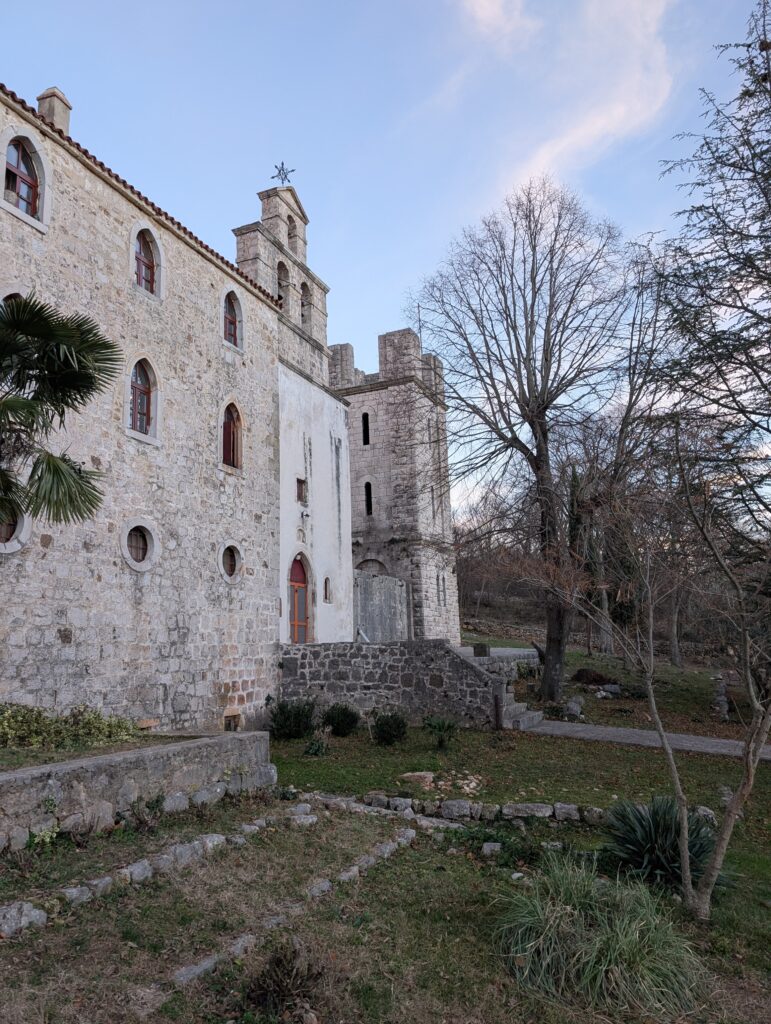
We love national parks, but we also love to be in nature and not in a national park. Those little spots that are only discoverable through savvy map studying or local tips, always seem to be the most memorable. Our hike near Krupa started at a 17th-century monastery. Despite two failed attempts to reach the trailhead in Tusker, and forced turn-arounds due to bridge weight restrictions, we ended up turning this into a bike and hike. We ended up parking at a church, marked on Google Maps as Crkva s. Georgije, which had a large grassy parking area.
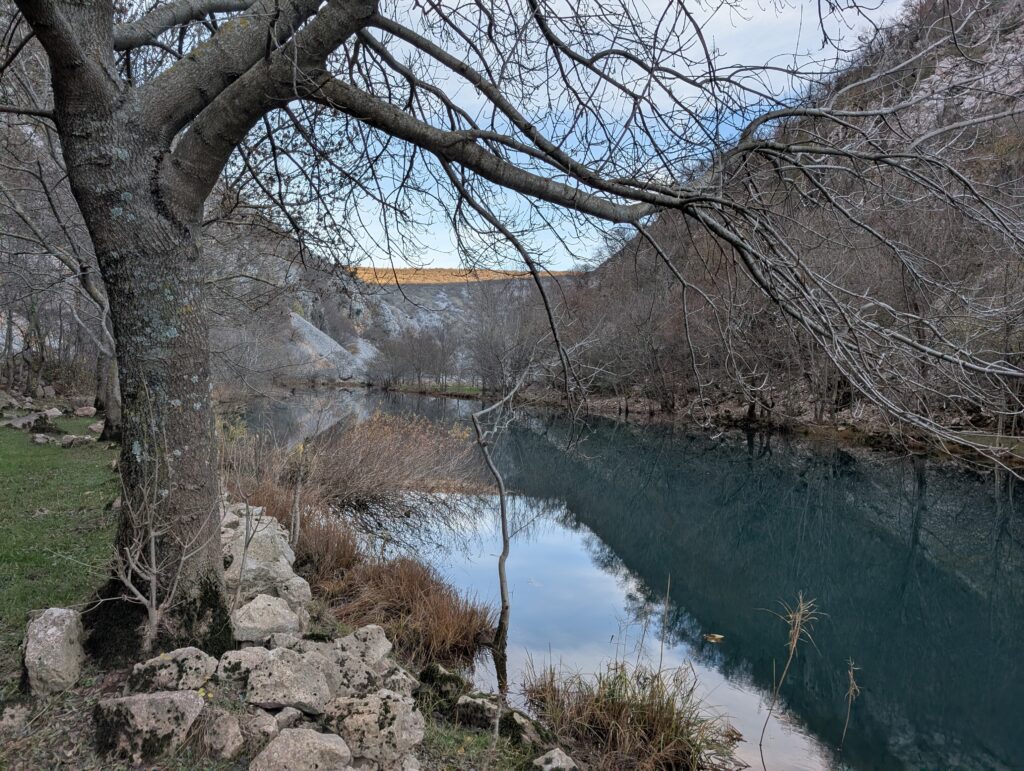
We parked our bicycles just before the monastery, and then continued on the trail, which was nothing spectacular at first. The trail led us to large grassy flatlands, where we had to pay close attention to our route, before arriving at the Krupa river. Navigation was straightforward at the river, which had the same brilliant azure blue color as the sea, but the walking required constant attention. The terrain was either boggy or rocky.
Unfortunately, we left only half a day for this adventure, but we realized it should have been a full day. We only made it in far enough to the first viewpoint and water crossing. Beyond that point were waterfalls and more viewpoints, a more rugged version of Plitnice National Park. We were the only hikers out that day.
The trails along the Krupa River are definitely worth visiting. My guess is that this gem is a welcome escape from crowds during tourist season. If it’s warm enough, plan on swimming. The water was enticing!
Krka National Park
Another park famous for its waterfalls, Krka National Park is most accessible to visitors enjoying a holiday in and around Split. The park is made up mostly of two lakes, and its highlight lies at the south end, a paradise of waterfalls and clear waters. In the tourist season, a boat runs the full length of the park, bringing visitors to various trails. The park boasts a large network of hiking trails and bicycle paths. In the off-season when the boat isn’t running, it is still possible to access the park at multiple points.
We were in a hurry to get back to the warmer air at the coast, so we opted for a day trip to the park’s highlight, Skradinski Buk, at the very southern tip. The main access point to see the falls is at Lozovac, but we opted to park in Skradin and ride our bicycles 3 or 4 kilometers along a gentle dirt track. The park described the track as being flat, but it wasn’t. More casual cyclists on bio bikes (the German term for non-eBikes) may have to walk a section or two.
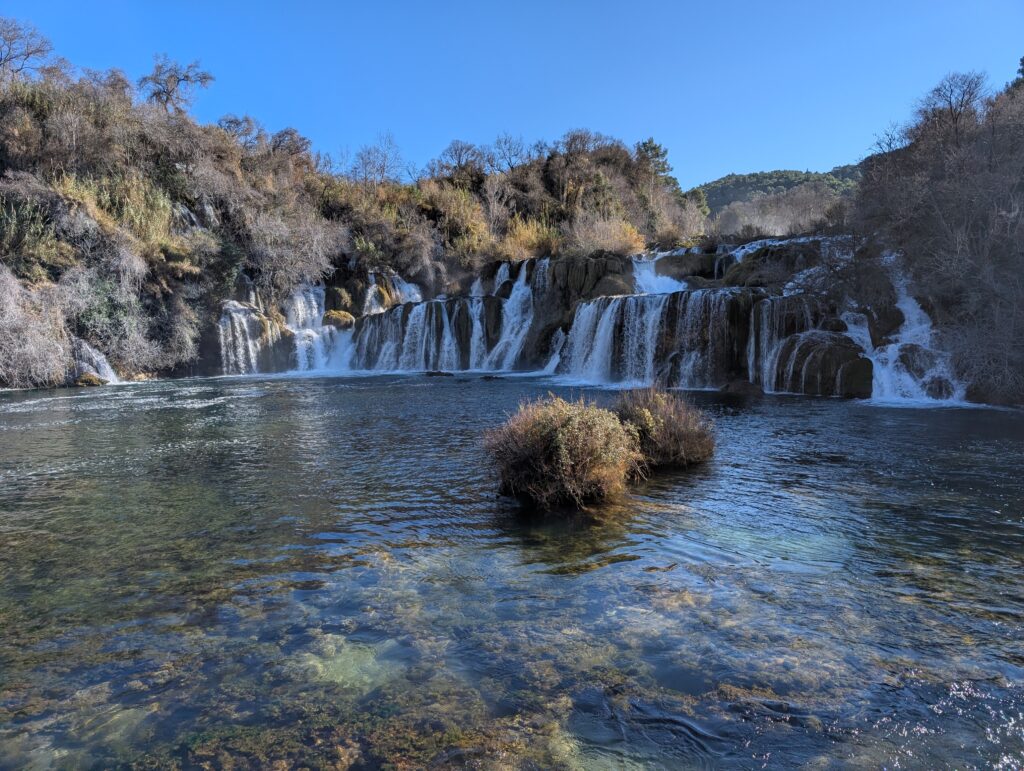
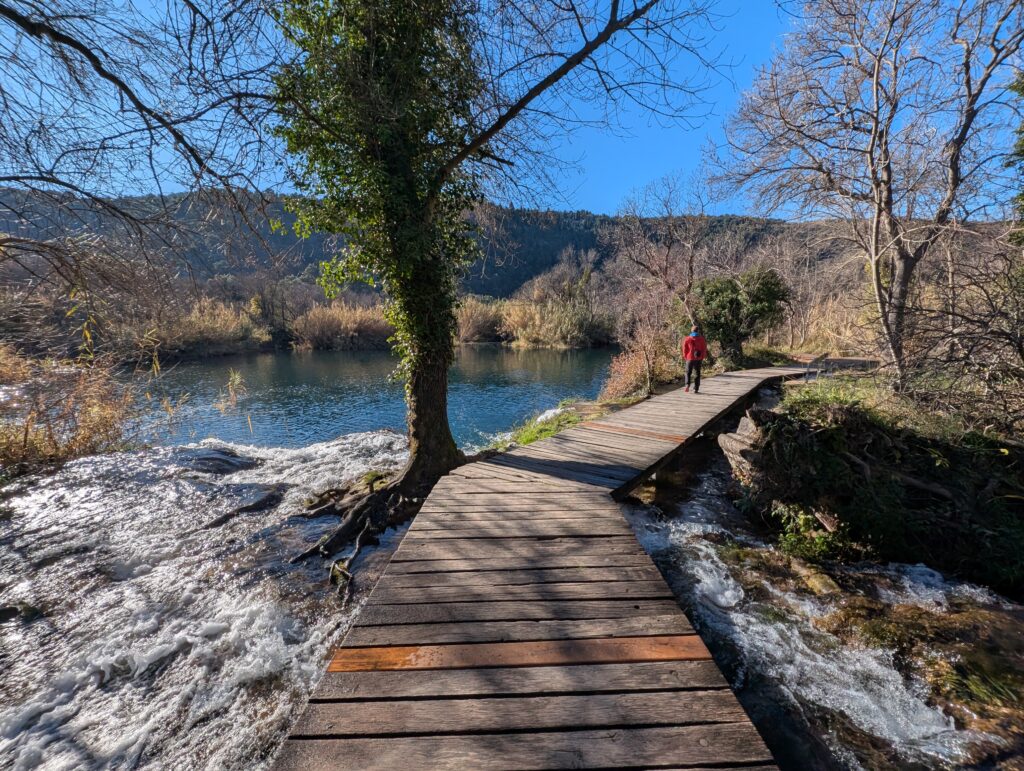
After parking the bicycles, it was a short walk into a central area with several snack stands and a gift shop, all of which were closed. Here was the highlight of the park, a wide and complex waterfall that plummeted into, don’t be shocked, crystal clear water. We followed the tourist trail as it led us past various levels of lakes and waterfalls, until we arrived at a network of boardwalks at the top, just below the main access point to the park. We walked over to the boat dock that takes tourists up north in the summer and then headed back to complete our loop, first via extended boardwalks through a maze of streams and waterfalls. The whole activity took us about half a day.
Krka National Park is absolutely a tourist highlight, and it is worth visiting. Often, visitors to Croatia try to compare and differentiate between Plitvice and Krka, so here’s my go at that. The waterfalls in Krka National Park were definitely more spectacular, but the lonely winter vibe in Plitvice is what truly stole my heart. I think that if the upper lakes had been open at Plitvice, I would feel even stronger about that. Of course, I didn’t experience either of them during the tourist season. If I had to choose just one of them to go back to, I would choose Plitvice. But, that’s just me. Krka might be a better choice for photographers.
Kava Beach
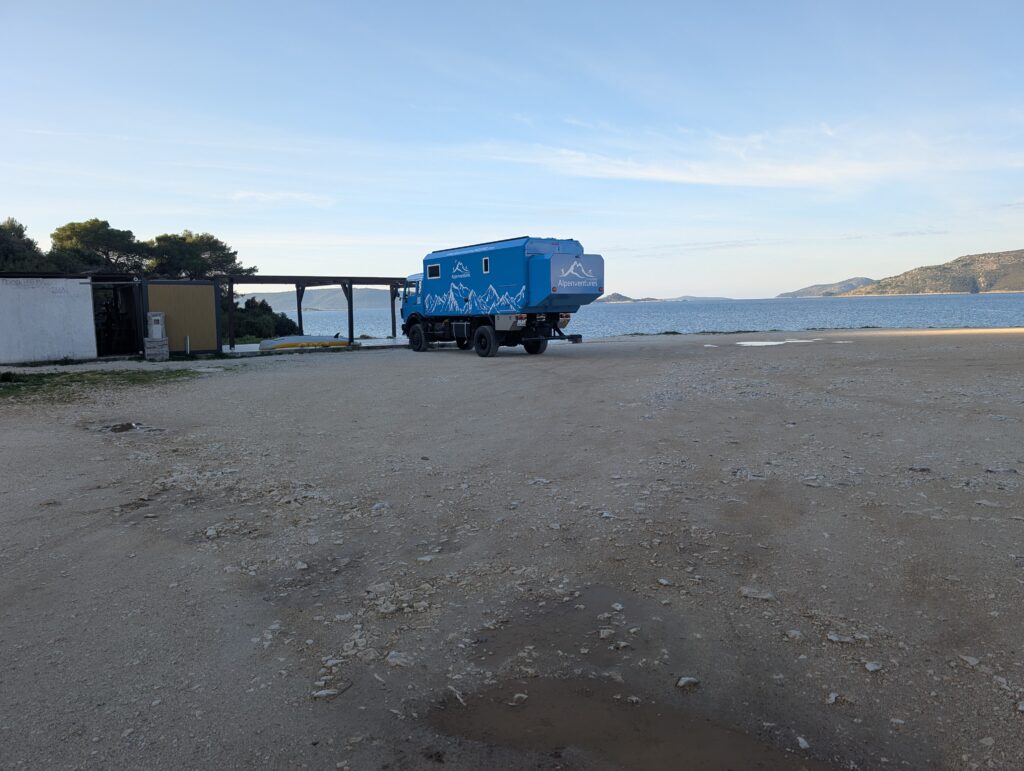
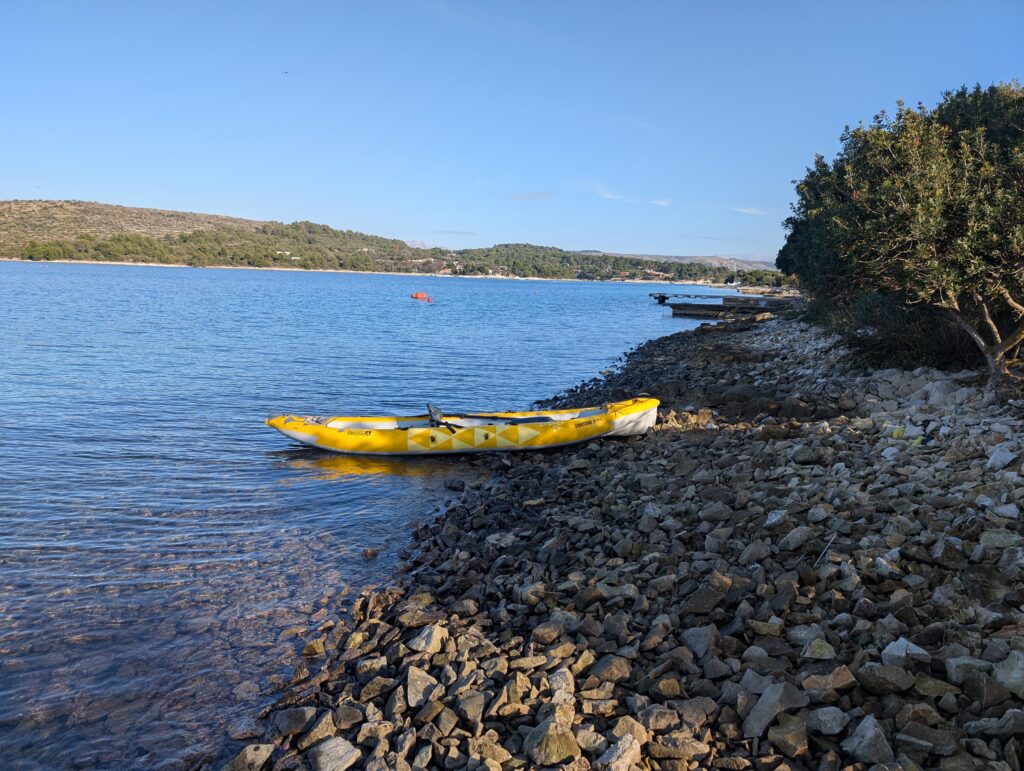
We were lucky enough to spend three nights directly on the water at Kava Beach. This beach is hopefully out of the way enough to avoid extreme crowding in summer, but when we were there in winter, it was quiet. There are two bars at this beach, both of which were closed.
This was a great basecamp for watersports. Despite the cold, we fit in some great snorkeling and there are plenty of paddle opportunities, usually in calm water.
Perunika Via Ferrata
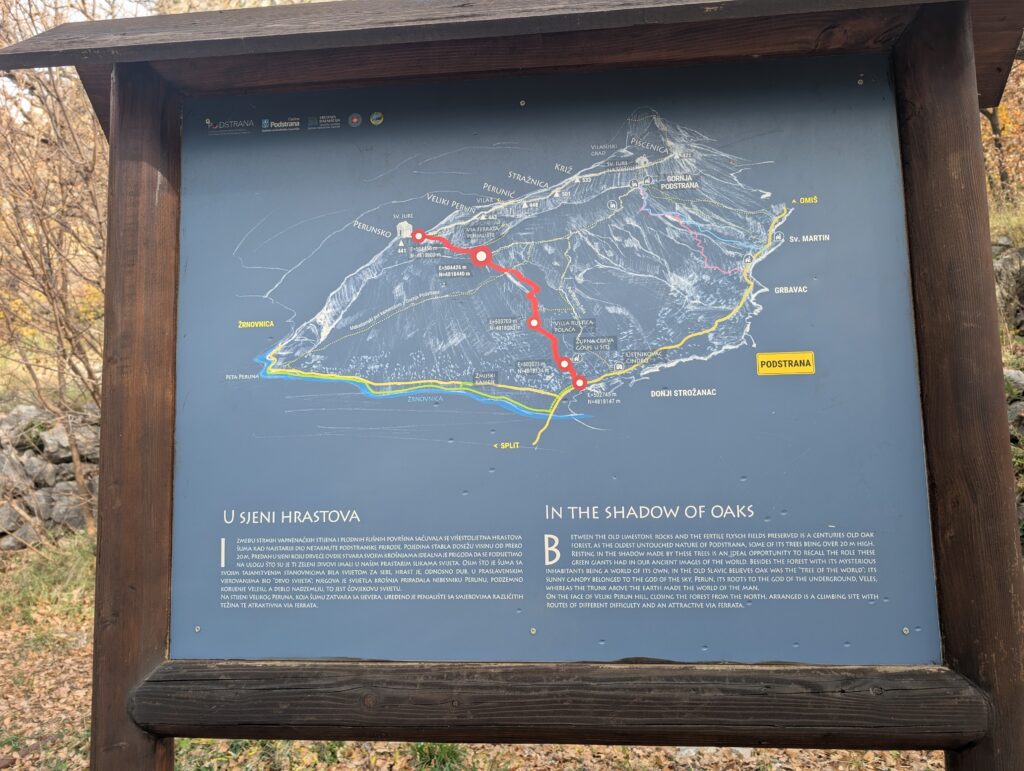
We spotted the via ferrata just south of Split using the Outdooractive app. With an A/B difficulty rating and a short length, we decided to squeeze it in on a day when we expected wet weather to come. We had to be a bit creative in finding a parking spot in Strobrec on the main road below the via ferrata, because the roads were too narrow to reach the official parking spot for it. This meant we had more ascent and a longer day, but it was more manageable.
The via ferrata was well signed out and we starting ascending residential streets, past a grocery store and a school, before finally turning off onto a dirt track. From here, the ascent steepened as we made our way up to the rock face that towered above us. Shortly before reaching the rock face, we came upon a pleasant picnic area, shaded by trees, perfect for a post-via ferrata celebration. Here, we followed the sign to the via ferrata. There was also a sign pointing to a rock climbing area.
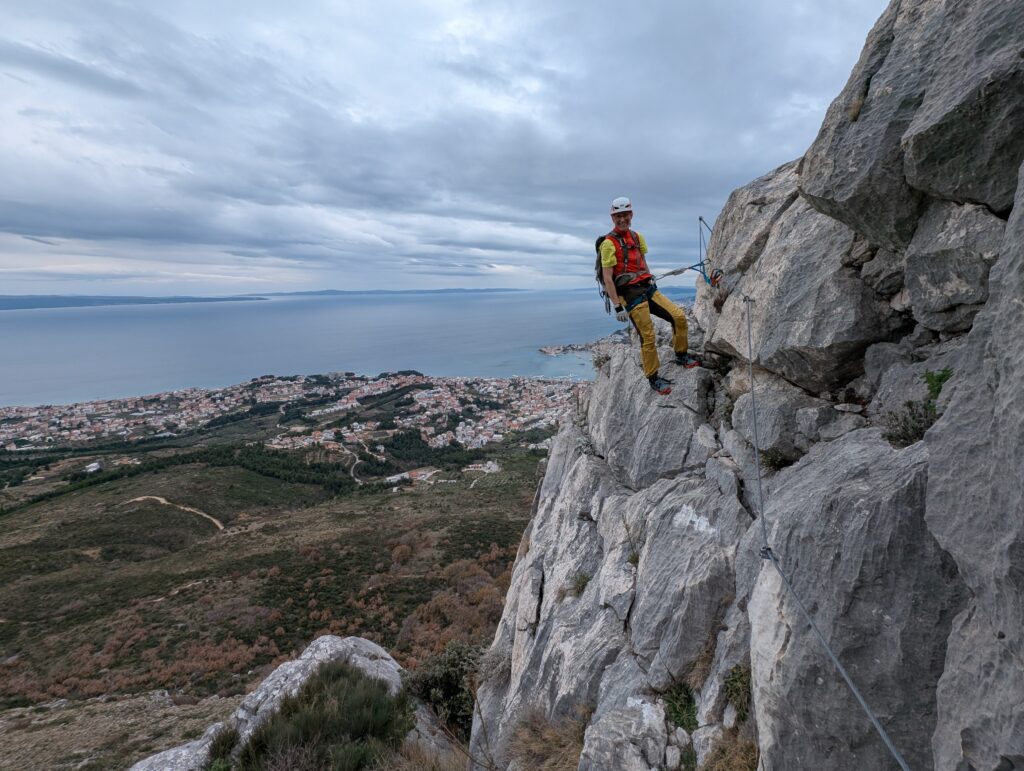
We pulled on our harnesses right where the cables start and began our climb. At first, the via ferrata was easy and unspectacular. The higher we went the better the views were. We finally hit an exciting part with a bit of exposure, and then a vertical section. The end of the via ferrata was full of surprises, and this via ferrata just keeps getting better and better the higher you go. By the time we reached the top, the wind was howling and cold. We sought wind protection on the summit, because it would be almost criminal to descend without enjoying the expansive view over the sea, with the city of Split in the foreground.
We had just one short ascent to a rustic mountain church before the steep part of the descent began. We looped down and around to the beginning of the via ferrata, just past the point where we pulled our harnesses on, and then continued to descend the same route as earlier.
This via ferrata is worth doing. Of course, only experienced climbers should do a via ferrata without a guide. It was well built, was a lot of fun (especially toward the end), and the views were among the best I have ever had on a via ferrata.
Biokovo Nature Park
The Biokovo made us fall in love with Croatia all over again. We rounded a corner on the coastal road, with passports ready to go and heading for the border with Bosnia and Herzegovina, and we were suddenly overwhelmed with what we saw. A couple hundred meters below, we watched the rugged coastline emerge from the sea and then shoot straight up, way above our heads, to 1500 meters. Wow! This is as dramatic as Croatian scenery gets.
We pulled the truck over to take it all in, and in the process, decided we were not ready to leave Croatia. There was still more to explore. So, we extended our stay in Croatia by a few weeks and pulled out our topo map apps to plan our next adventures.
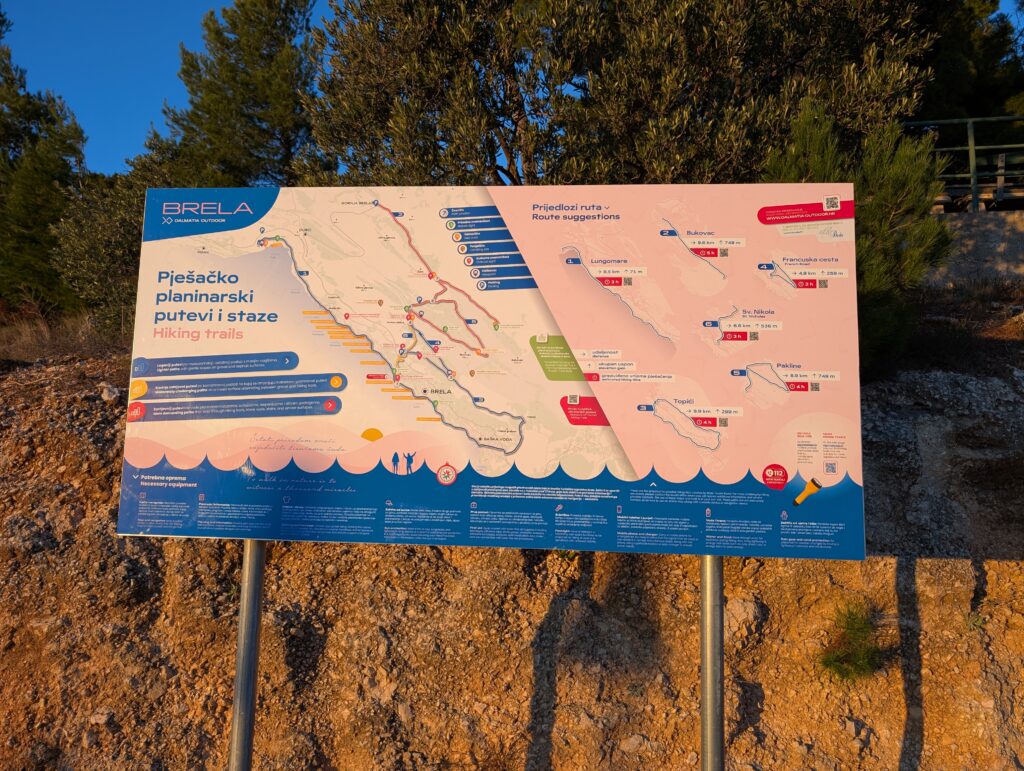
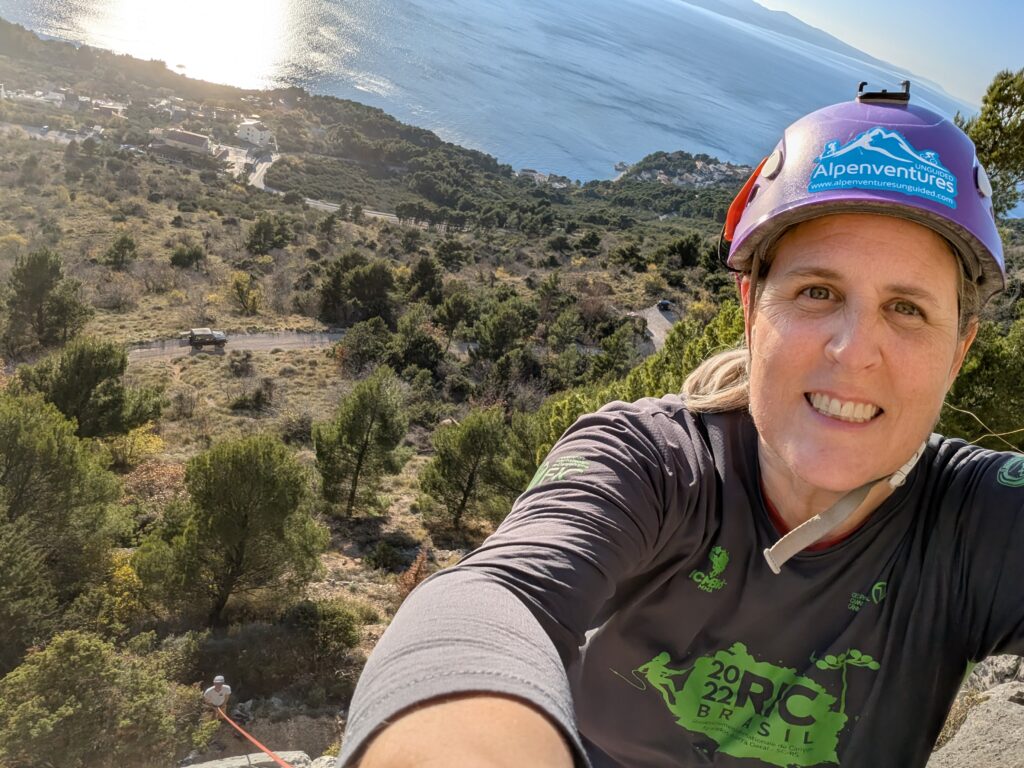
There is a lot to do in the Biokovo, but we certainly were not there in the right season. The Bora winds are intense on the peaks and icy cold, and we had pretty miserable weather the day we arrived. We ended up going to the climbing garden above Brela, which is well signed out. We spent our time on the easier routes in Sector A, directly accessible by a short trail directly from the parking area. But, we opted to park in town with the truck and walk the short ascent to the climbing area. We had full sun, sea views and were wind protected. The climbs were well marked and the bolting was top notch. We felt they were a bit more difficult than they were rated.
A few other interesting points for climbers…there is at least one other sport climbing crag in the Biokovo, which we drove by quickly to the south and just saw the sign marking the turn-off. But, where Biokovo really shines is in long multi-pitch ascent routes. There are routes all over the place, some of them easier and some of them more difficult. We ran into a couple that had just finished off an 8-pitch route and they said it was too hot. That was on December 26th. So, I guess it’s really a winter climbing area if you are going to be up on the big faces.
Our second adventure in the Biokovo was a hike. There is so much hiking to do here, but most of it is difficult with 1,300-meters of ascent and more. There are some smaller hikes, but this area is most dreamy for experienced and fit hikers.
Our loop hike started and ended in Veliko Brdo. We first ascended a gully. The trail was incredibly well-built and spectacular, but eventually a massive and challenging vampire scree field stole our attention from the views. I call it vampire scree, because it sucked the energy right out of us…two steps forward and one step back. Eventually, we made it through the worst of the scree and the ascent became more gentle and eventually evened out as we made our way up to the Slobodan Ravlic Mountain Hut. Shortly before the mountain hut was a small, frozen pond, which was the first reliable ice source in the region. This supplied tourist establishments in Makarska long before freezers were a thing.
We weren’t sure what to expect at the mountain hut, but we certainly didn’t expect them to be serving Johannesbeer Schorle – my favorite beverage at the German-speaking mountain huts in the Alps. We were surprised to arrive to a hut with an open door and a group of cavers hanging around. Inside the hut were cardboard produce boxes full of their food supply for the week. Clearly, they didn’t carry that up the scree gully! There was a dirt road nearby, and we assumed that they likely were allowed to drive fairly close to the hut with their supplies.
With the short day in mind, we had to keep going, following a trail west to complete our loop. This section was somewhat of a moonscape with massive, seemingly bottomless craters scattered about. The trail never went where I expected it to, and there were surprises around every corner. As we traversed below the summit of Borovac, we began our descent through a forest, yet another surprise. The trail was shockingly gentle in comparison to what we came up. But this was not to last.
Almost in one step, we emerged from the forest and onto a spectacular rocky rib clinging to a near-vertical cliff. We were in an amphitheater, with overhanging rock walls above, and more solid ground far below us. We marveled at how the trail steeply descended this rock formation without ever seeming exposed or scary. We made it to the bottom of the bowl, briefly descended a mellow scree field and ducked into a forest once again. We thought the worst of it was over, but less than two minutes later, the terrain dropped rapidly away once again, and we found ourselves on a rocky trail in seemingly impassable terrain for round two.
We arrived back at Tusker just as darkness was setting in, and got away without pulling out our headlamps. The entire loop turned out to be about 10 km, with about 1200 meters of elevation gain.
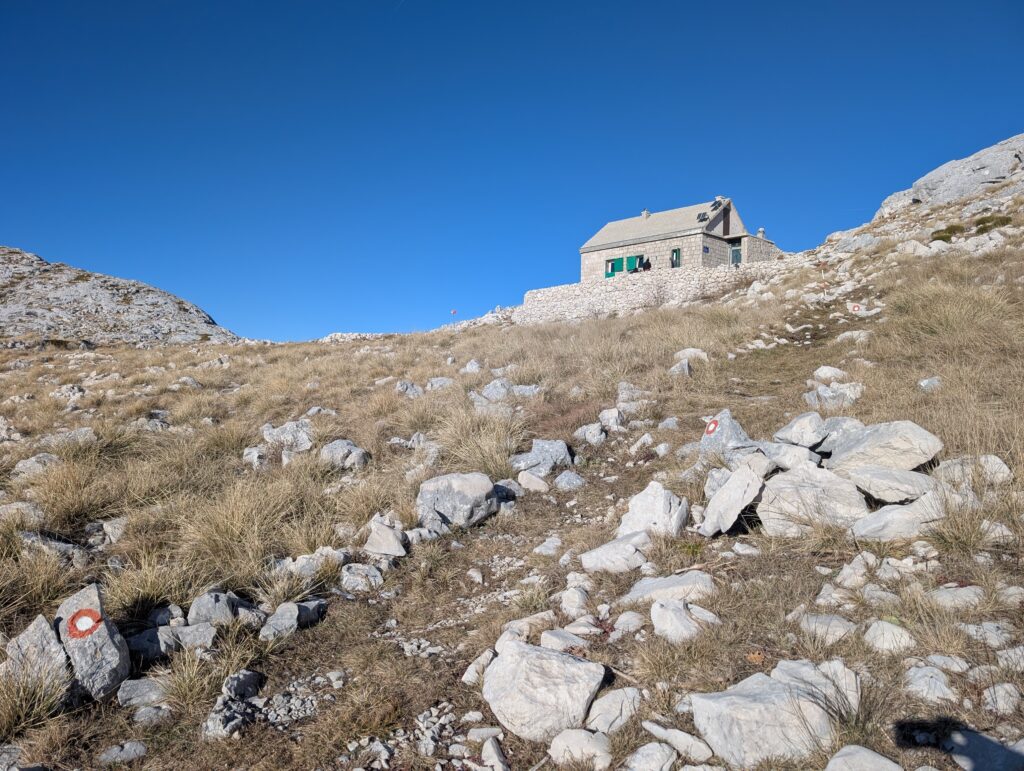
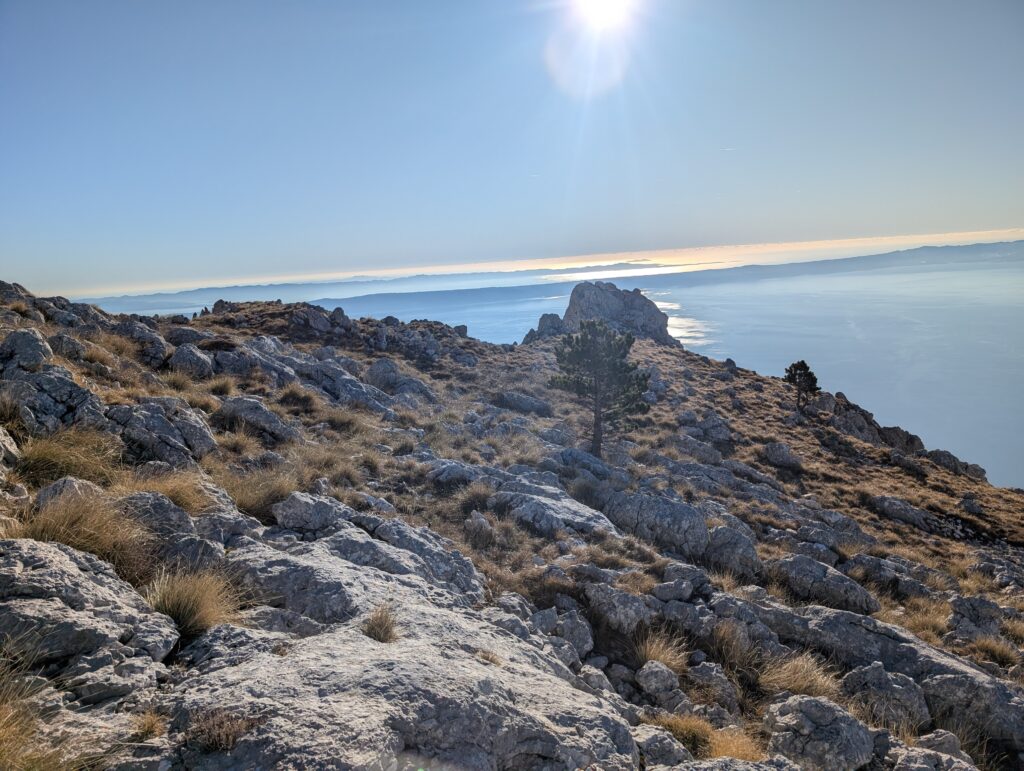
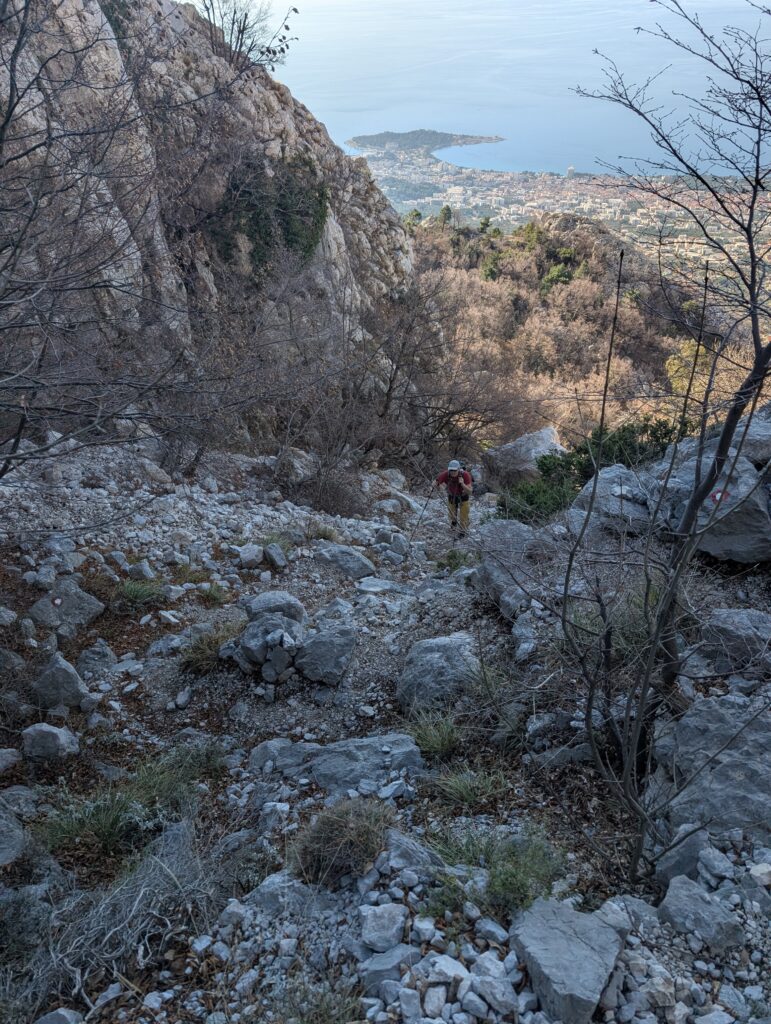
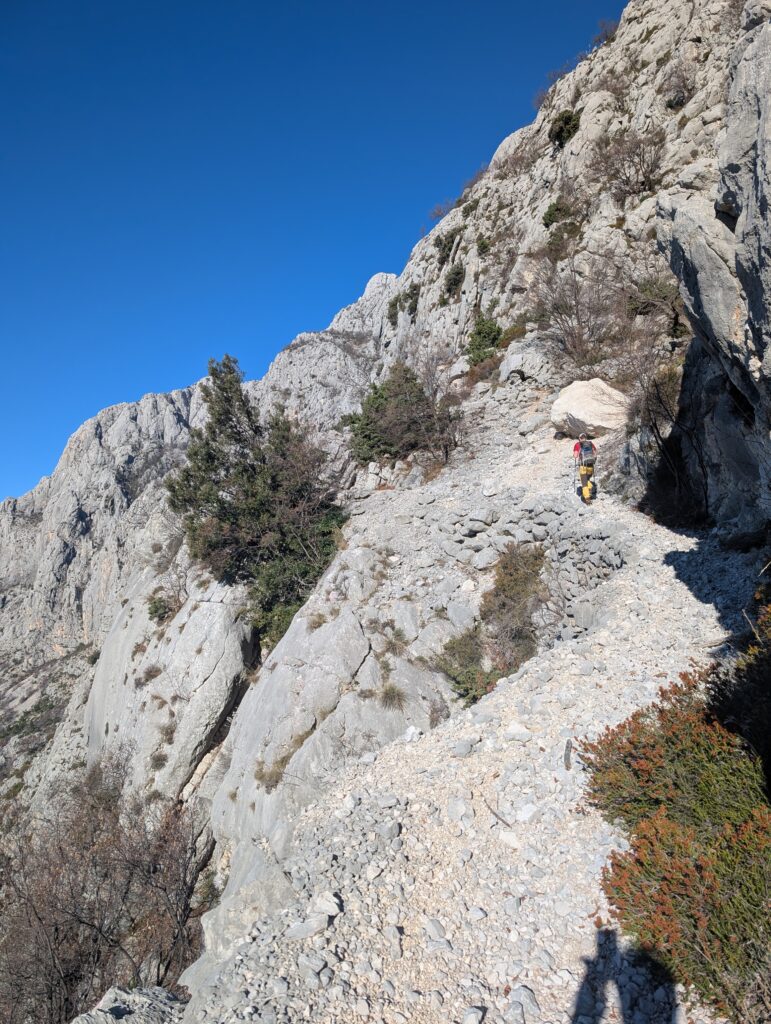
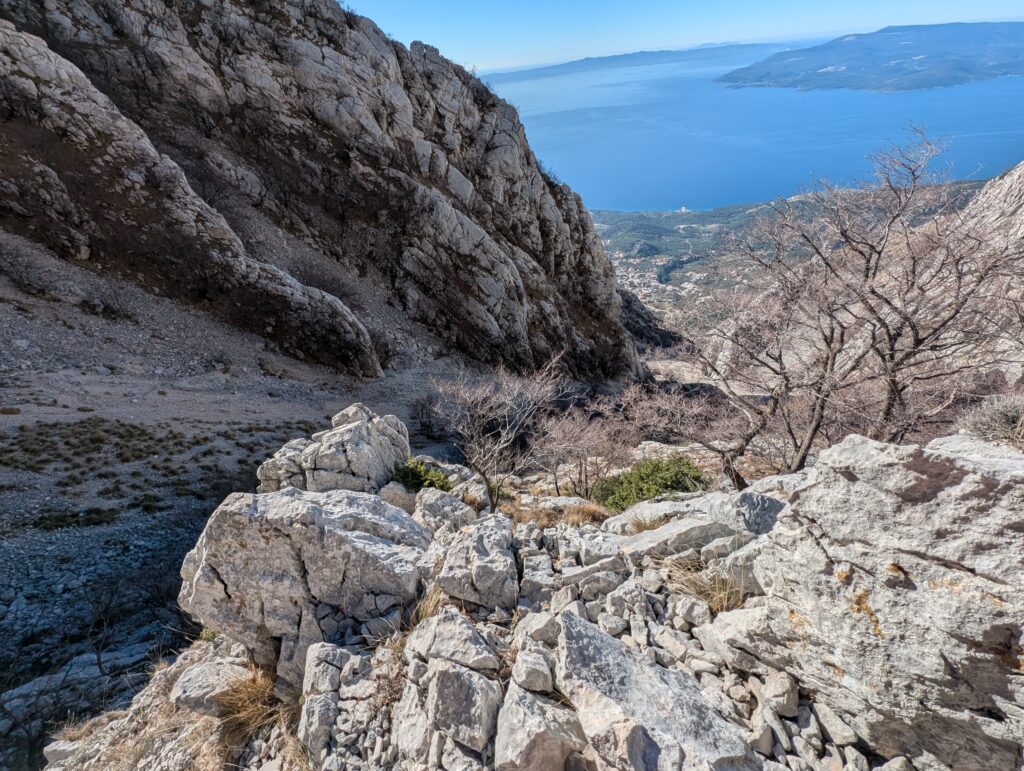
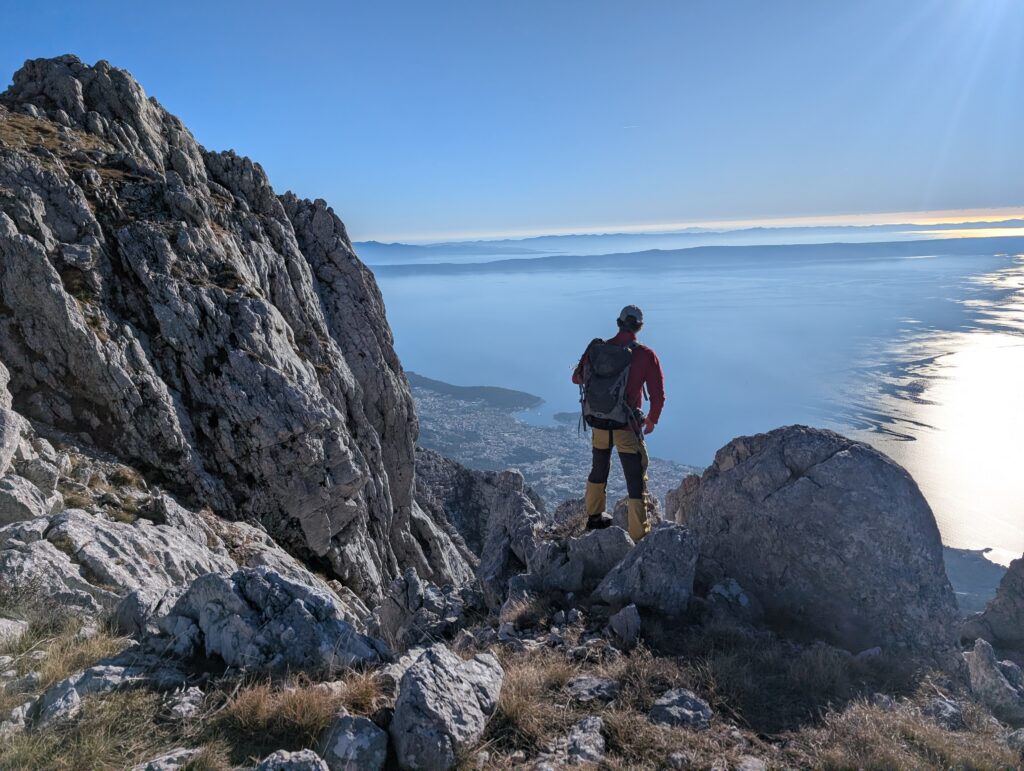
Our time in the Biokovo was cut short due to the misery of the Bora wind at the top. But, there is so much more to do there for rock climbers, for fit hikers and for cavers. If I were to come back, I would focus on hiking. I would try to book the hut and bag peaks from there. You could probably fit in at least 10 peaks in one day if you stay at the hut.
You can get information about booking the hut here: Planinarska kuća Slobodan Ravlić – Planinarske kuće – Hrvatski planinarski savez
Pelješac Peninsula
Anybody driving from Split to Dubrovnic will bypass the tiny snippet of Bosnia and Herzegovina that interrupts the Croatian coastline via a bridge to the Pelješac Peninsula. Impressed by the high mountains, we decided this long arm of land deserved some extra time and attention. We drove the peninsula almost out to its very tip, crossing over passes as we weaved from side to side along the peninsula, from inland to coastline. In between the passes, we often drove shelf roads (paved and in good condition) high above the sea, offering views to the neighboring island. The drive, alone, was spectacular.
Hike up the Sveti Ilija, 961 m: 15 km. roundtrip with 680 m. of elevation gain
Most of the hiking we found on the map was on the very western tip, starting in the ancient town of Orebić. Here, the Sveti Ilija summit towers above the town by nearly 1.000 meters. There are trails from Orebić and Viganj, but as we were already parked in the Nakovana area, on the pass beyond Viganj, we chose to approach from there. This was only a reasonable choice because we had our mountain bikes with us, and we were able to bypass 3 kilometers (6 kilometers out and back) of boring dirt-road walking. At the end of this dirt road, and where the hiking trail starts, is a large gravel parking lot. It’s labelled as a trailhead on Google Maps, but the road up there is now blocked off.
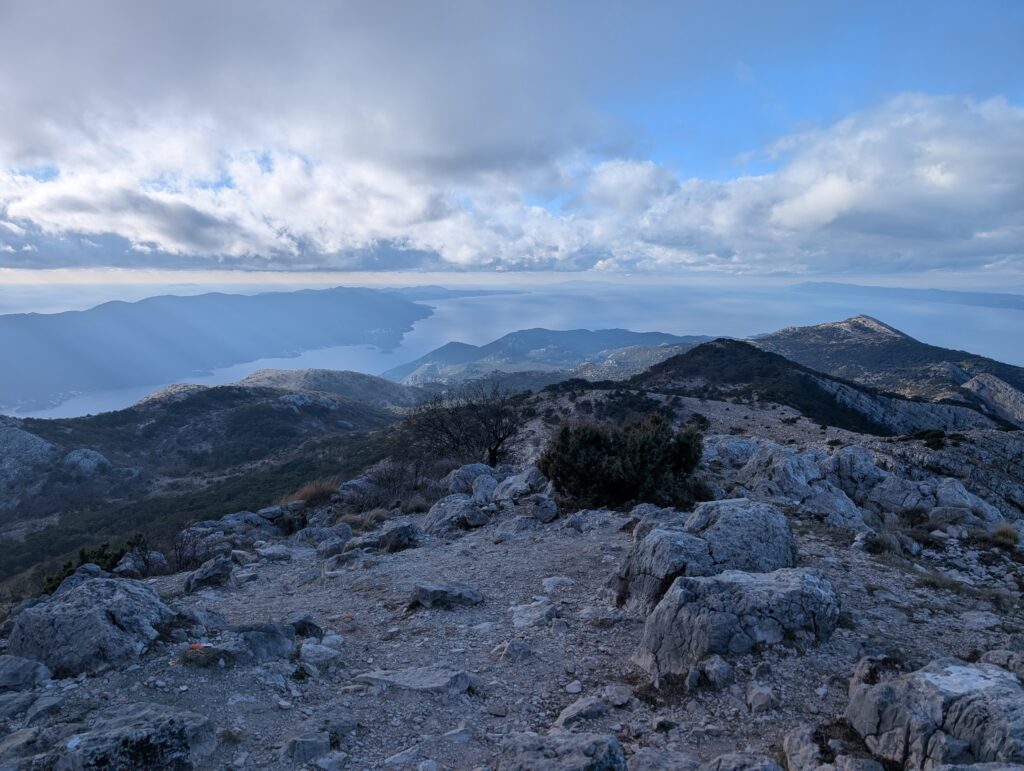
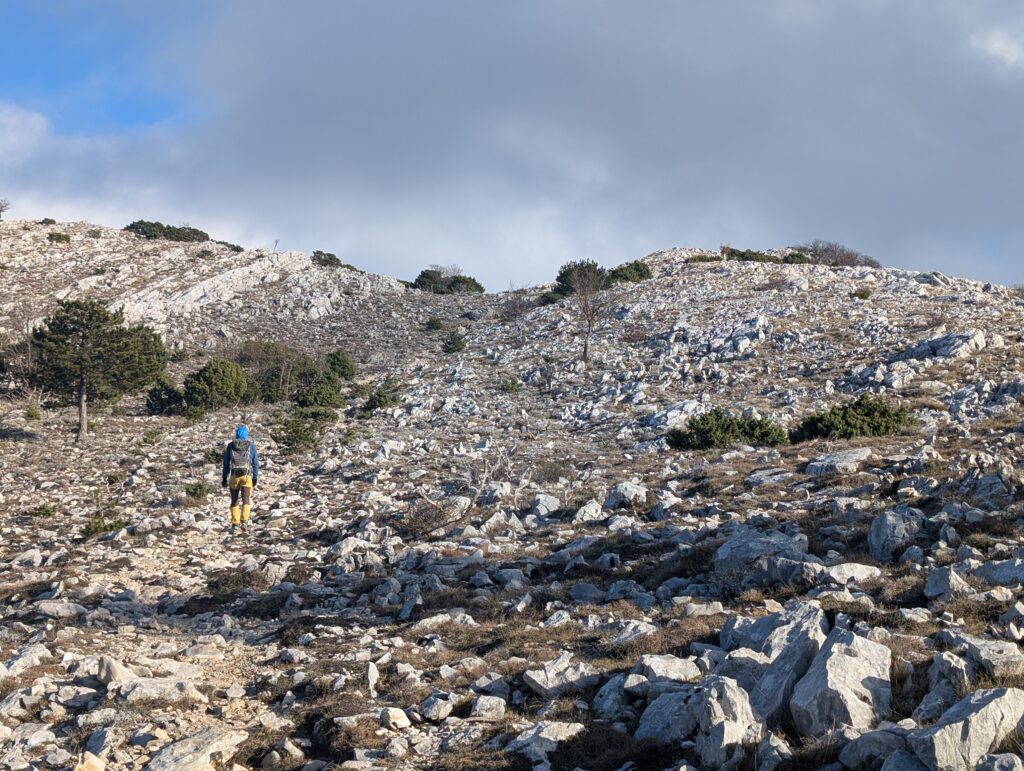
Our hike began steeply on a rocky trail, but mellowed before reaching the first hut, which was closed because it was not only January but also New Year’s Day. We then continued on through the woods on easy dirt trails until the ascent began again. There was ample evidence that this is a very active area for wild pigs. We then arrived at a second hut, Planinarski dom Sveit Ilija, also closed. From here, we could see the barren route to the summit. The wind was strong that day, so we bundled up and pushed for the summit. Surprisingly, much of the route was more protected than it looked. From the summit, we could trace the rugged peninsula back to the mainland and admire the surrounding island. But, we didn’t stay for long and sought the windshelter from the trees. The route we did was 15 km. round trip with 680 m. of elevation gain.
Rock Climbing at Nakovana
It turned out that the spot we chose to park for the night was right at a climbing area. So, naturally, with a half day of good weather in the forecast before a week of miserable rain, we decided to sneak in some rock climbing.
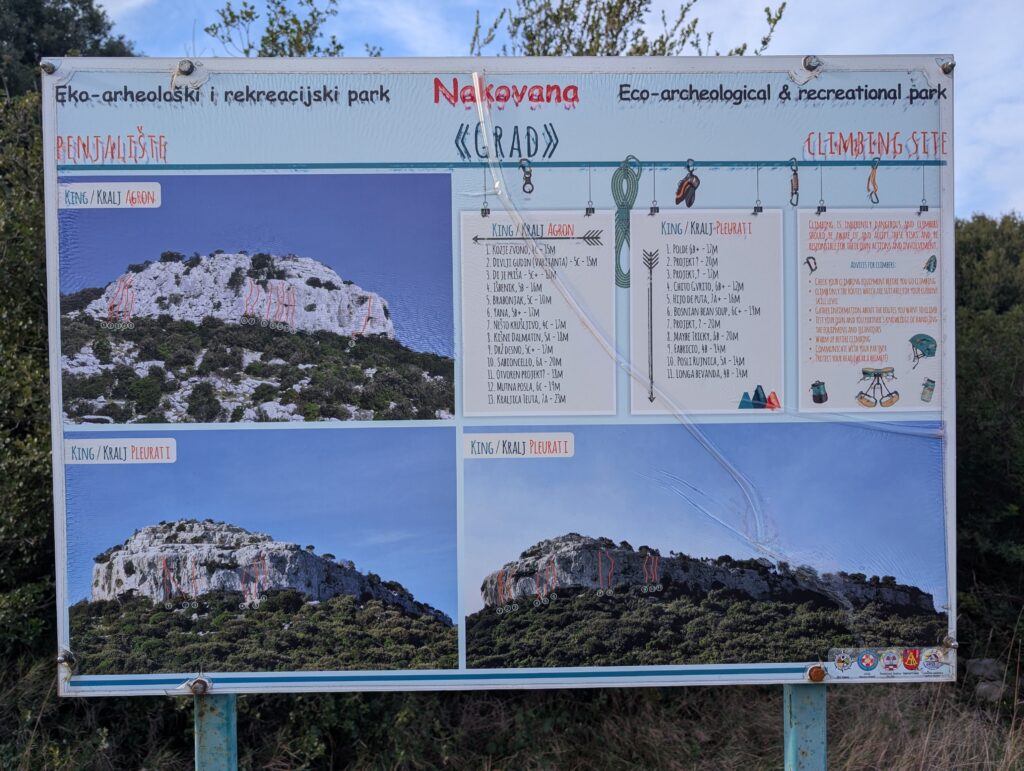
We weren’t able to find much information online, including the approach to the crag, but luckily we located a sign roadside with all the routes listed. We took a photo and then followed the trail behind it. Parking is available at various points along this road in small plots on either side.
The trail was well marked at first, leading through the archaeological ruins. Eventually, it led us to the shoulder on the west side. Here, we lost markings, but turned left to follow the shoulder up to the rock faces we assumed made up the climbing area. The trail turned to traverse the southwest slope for just a short bit. We turned left onto what looked like an unmarked climbers’ trail to ascend to the rock faces, but the main trail continued.
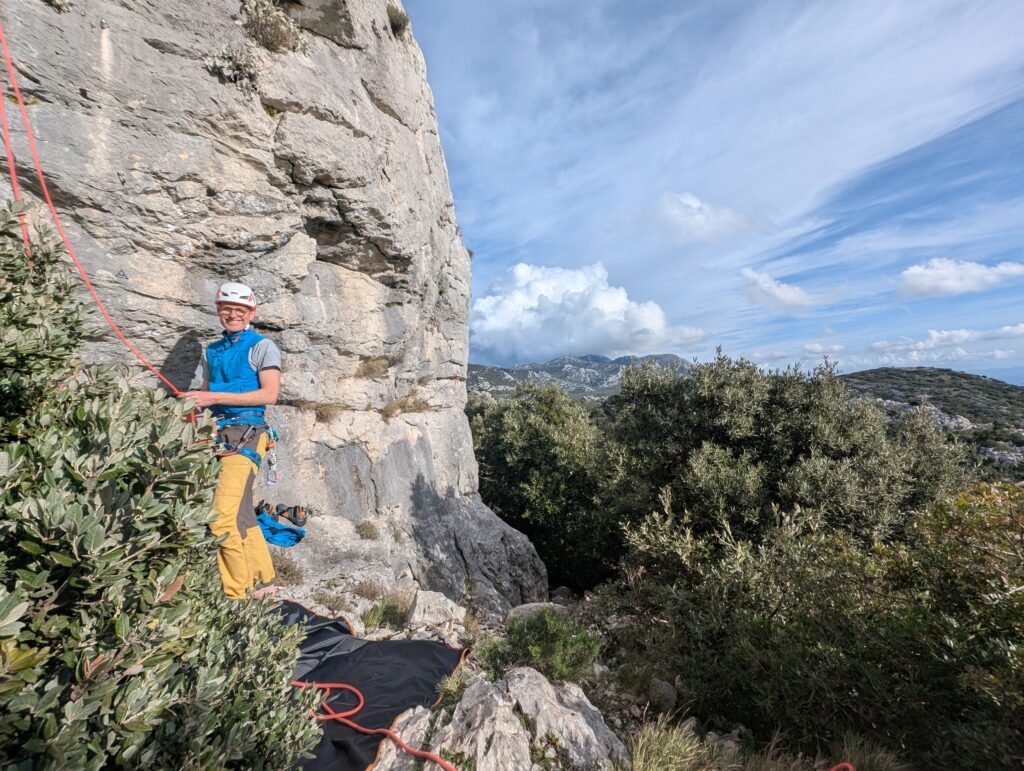
We walked to the left around the base of the rock and eventually arrived at the first climbing routes, the difficult ones in the “Pleurati” area. At the next corner, we left the “Pleurati” area and arrived at a comfortable and shaded base for the Agron area. There was a cluster of climbs here, and when you push past this area, seemingly trailless, you eventually come to another approach trail and the first climbs of the Agron area. These are more exposed to the sun, which was ideal for us in January.
The climbs were fun and interesting and the views were great. The rock was sharp, which complemented our plans for only a half day of climbing. Each route was well marked, with the name and difficulty level at the bottom. I feel that the climbs in Croatia are usually more difficult than they are rated, but that could just be because I’m not in climbing shape anymore.
There is also climbing in Vaganj, but we did not check those climbs out. Information about these climbs is available online: https://www.thecrag.com/climbing/croatia/dalmatia/area/4658431947
Nakovana Archaeological and Historic Site
Nakovana is the small plateau just beyond Nakovanj. This is a protect area of historical and archaeological significance that has been populated up until very recently for 8000 years. There are two abandoned villages and a church, a cave with a shrine and a zodiac, but evidence of other ruins is scattered throughout. Just wandering between shrubs on the plateau, there is much to stumble upon. Just be sure you can find your way back, because it’s easy to get turned around in this terrain.
Read more about the historical site here: https://nakovana.com/viganj-2/nakovana/
Ston and Mali Stone
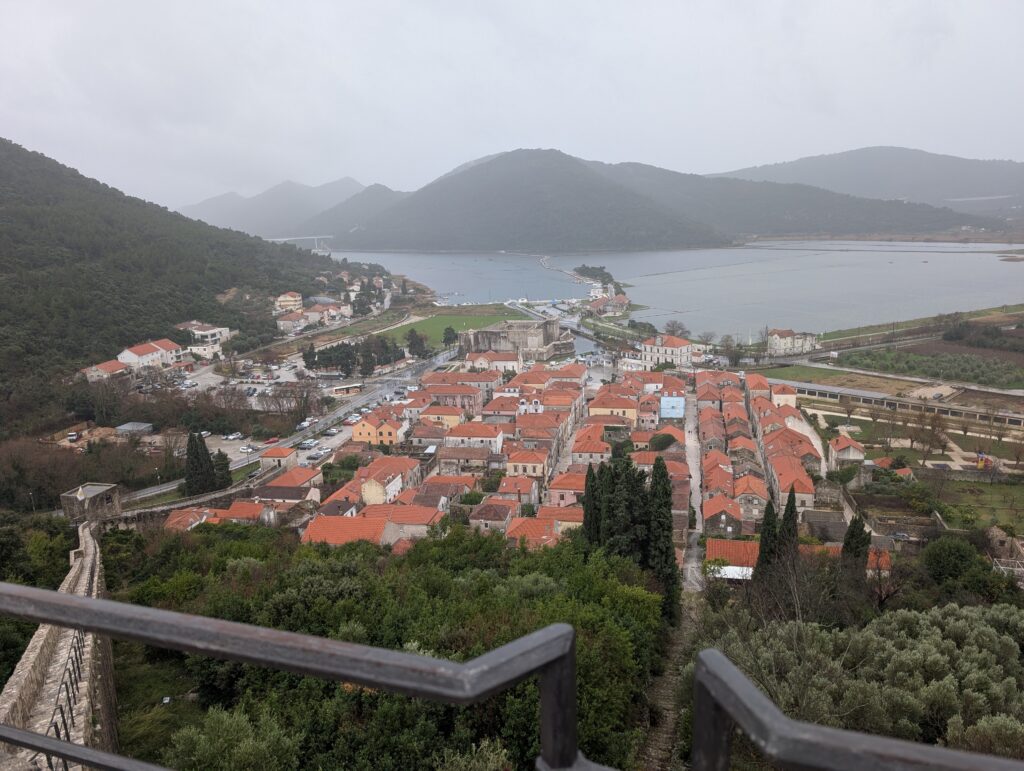
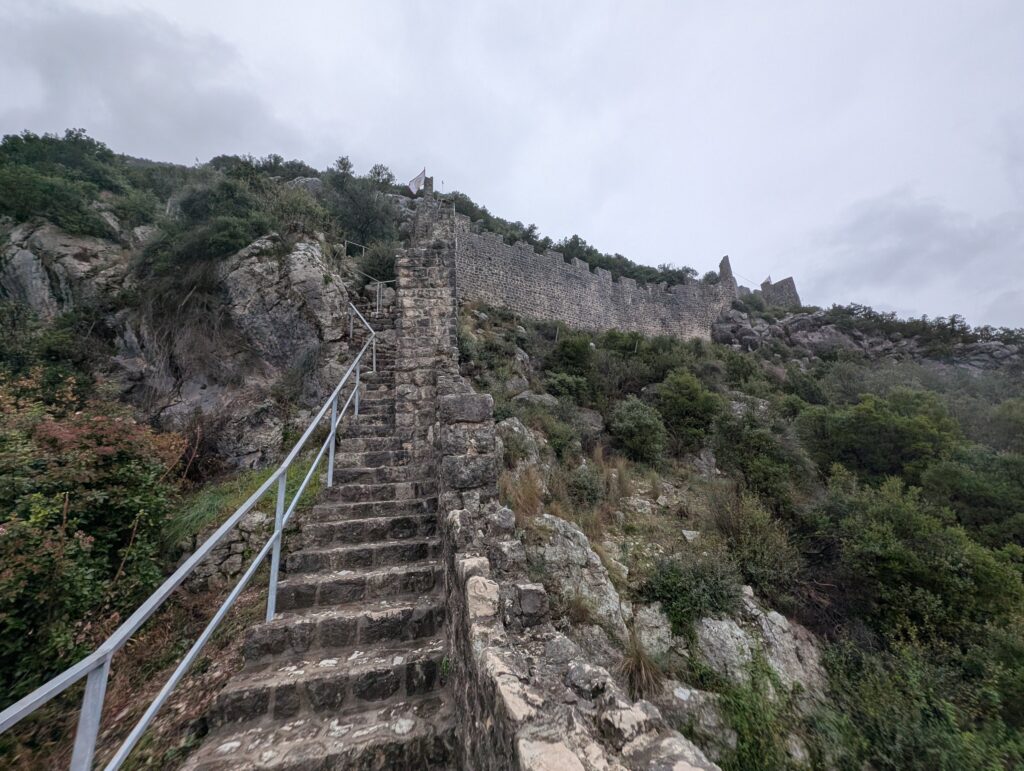
At the point where the Pelješac Peninsula meets the mainland, massive stone walls rise above the ancient town of Ston, and connect to nearby Mali Stone. These walls were built in the 14th century to protect and control access to the peninsula. Not unlike the Great Wall of China, it’s possible to walk to these walls. Bring good shoes and good lungs, because this involves a lot of stairs on rough stone.
We started on the wall that encloses Ston, and then made our way over to Mali Ston. Stopping for pictures, the entire walk probably took 1 hour 15 minutes. We treated ourselves to delicious, but expensive, cake in Mali Ston before walking back on a good walkway along the road to Ston. It was interesting, and turned out to be a great stormy day activity for us.
But, that’s not all this area has to offer. Ston and Mali Ston are famous for oysters and delicious restaurants, so of course we had to indulge. The region is also known for its salt production.
Tips: There are 8, large, designated sites for campers right at the harbor. I believe they were 10€ a day, but as we were there in January, they were free. Also, not too far away, near the ferry port for Mljet, the Prapratno Beach was beautiful and is worth a stop.
Dubrovnic
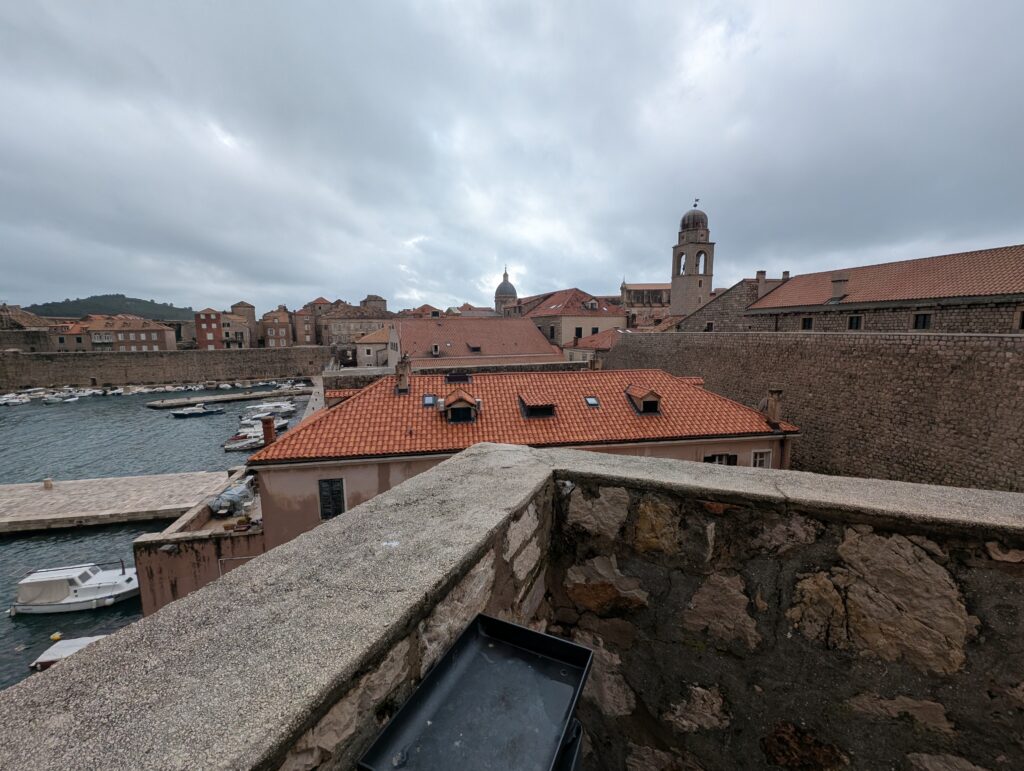
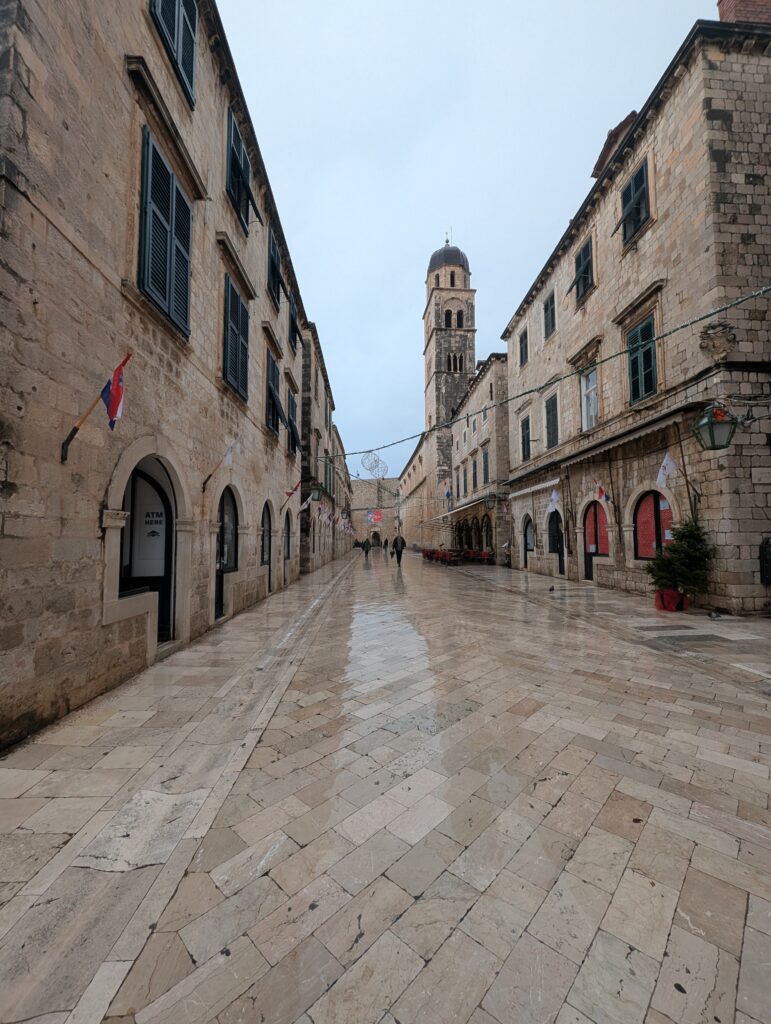
Once one of the most important seaports in the Mediterranean and today an equally important tourist hotspot, we decided a rainy day in January was the perfect time to explore this medieval city, hopefully without crowds. Although we are not usually museum people, the weather forecast prompted us to purchase the Dubrovnik Pass, which granted access to many museums and indoor highlights, plus the city wall.
During rainshowers, we ducked into the Rector’s Palace, the Maritime Museum and the Franciscan Monastery. Luckily, we were also surprised by tolerable conditions that allowed us to walk around the city wall. It is an interesting city and we mostly enjoyed just walking the streets and admiring the architecture. However, I must admit that the highlight was our stop for cake at the Gradska kavana Arsenal Restaurant.